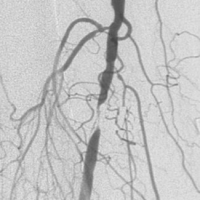
Angioscopy emerges as the vascular “direct vision” tool that reveals what angiography often misses: thrombus, plaque rupture, yellow vulnerable plaques, incomplete stent healing, and embolic aortic sources. The full review is worth reading because it maps where this old but powerful technology still has modern clinical value — from coronary risk prediction and DES healing to carotid surgery, bypass quality control, flow-diverter follow-up, and cryptogenic stroke work-up.
Human-verified editorial review
Verified by World ID proof-of-human. This editorial layer was submitted from a SAIMSARA account verified as a unique human.
Abstract: The aim of this paper is to synthesize the clinical evidence regarding the diagnostic accuracy, interventional utility, and prognostic value of angioscopy across various anatomical substrates, with a particular focus on its comparative performance against traditional imaging modalities and its role in guiding therapeutic decision-making. The review utilises 599 original studies with 32878 total participants (topic deduplicated ΣN). Across the mapped evidence, angioscopy emerges as a highly sensitive modality for direct endoluminal visualization, detecting intracoronary thrombi in up to 61% of cases versus 20% by angiography and identifying aortic plaque rupture with an odds ratio of 14.3 for ischemic stroke. The strongest and most recurrent signals cluster around vulnerable plaque characterization through yellow plaque grading, where patients with five or more yellow plaques showed a 3.8-fold higher event rate and acute coronary syndrome occurred in 28.2% versus 3.4% of yellow versus white plaque carriers. Convergent evidence also supports angioscopy-guided quality control in carotid endarterectomy and infrainguinal bypass, serial monitoring of neointimal or endothelial coverage after carotid stenting, coronary drug-eluting stents, flow diverters, and structural occluder devices, and non-obstructive general angioscopy for aortogenic embolic mechanisms. Clinically, these signals indicate a practical role for angioscopy as a complementary rather than replacement modality, informing selected antiplatelet de-escalation decisions, surgical revision decisions, and risk stratification in cryptogenic stroke and chronic kidney disease. The mapped literature is nevertheless dominated by small, heterogeneous, observational studies with limited inter-observer reproducibility, which tempers certainty around prognostic thresholds and device-specific healing claims. Future research should prioritize adequately powered prospective studies with standardized quantitative colorimetry and validated neointimal or endothelial coverage grading to confirm whether angioscopy-guided decisions improve long-term clinical outcomes across coronary, peripheral, aortic, and neurovascular substrates.
Final search date and database lock: 2026-04-22 23:32:48 CEST
Plan: Pro (expanded craft tokens; source: PubMed)
Source: PubMed
Total Abstracts/Papers: 1239
Downloaded Abstracts/Papers: 1239
Included original and non-original Abstracts/Papers (all): 627
Included original Abstracts/Papers (Vote counting by direction of effect): 599
Reference Index (links used in paper): 226
Total participants (topic deduplicated ΣN): 32878
Get access to the full paper
Unlock the full evidence map
The full evidence review, including the Introduction, Methods, Results, Discussion, Conclusion, figures, and complete reference index, opens after purchase or sign-in.
The Evidence Object JSON is a separate machine-readable evidence product: a concentrated synthesis of results, topic-level evidence, and discussion across original and non-original studies. It can be directly input into your LLM, agent, or RAG workflow.
[4] Angioscopy: Direct visualization of chronic venous occlusion, May-Thurner syndrome, and other applications in phlebology. — https://doi.org/10.1016/j.jvsv.2019.05.008
[11] Angioscopy-Guided Selective Pulmonary Thrombectomy and Angioscopy-Monitored Systemic Thrombosis for a Pulmonary Embolism. — https://doi.org/10.7759/cureus.38365
[30] The Height and Mobility of Protruding Plaque After Carotid Artery Stenting Are Associated with Postoperative Ischemic Lesions. — https://doi.org/10.1016/j.wneu.2022.12.127
[32] Intraoperative completion studies in carotid endarterectomy: systematic review and meta-analysis of techniques and outcomes. — https://doi.org/10.21037/atm-20-2931
[40] Case report of a peripheral artery disease patient with its aetiology clarified by retrograde angioscopy. — https://doi.org/10.1093/ehjcr/ytac393
[41] Comparative Evaluation of Angioscopy and Intravascular Ultrasound for Assessing Plaque Protrusion During Carotid Artery Stenting Procedures. — https://doi.org/10.1016/j.wneu.2019.01.102
[54] False lumen thrombus following aortic dissection diagnosed as the source of repeat lower extremity emboli with angioscopy: a case report. — https://doi.org/10.1186/s40792-022-01416-7
[63] Atherosclerosis of the aorta before blue toe syndrome: Spontaneously ruptured aortic plaques revealed by non-obstructive general angioscopy. — https://doi.org/10.1016/j.jccase.2023.06.005
[96] Quantitative colorimetry of atherosclerotic plaque using the L*a*b* color space during angioscopy for the detection of lipid cores underneath thin fibrous caps. — https://doi.org/10.1007/s10554-007-9212-1
[107] Serial angiography and angioscopy of late lumen enlargement after drug-coated balloon for dysfunctional arteriovenous fistula. — https://doi.org/10.1177/11297298241256683
[109] Malondialdehyde-modified low-density lipoprotein is a useful marker to identify patients with vulnerable plaque. — https://doi.org/10.1253/circj.cj-12-0183
[112] Safety and feasibility of dual antiplatelet therapy termination guided by angioscopic findings 6 months after flow diverter placement. — https://doi.org/10.3389/fneur.2025.1649290
[113] Angiographic, ultrasonic, and angioscopic assessment of the coronary artery wall and lumen area configuration after directional atherectomy: the mechanism revisited. — https://doi.org/10.1016/0002-8703(95)90432-8
[121] Angioscopy--a valuable tool in guiding hybrid stent grafting and decision making during type A aortic dissection surgery. — https://doi.org/10.1016/j.ejcts.2010.02.010
[123] Comparison of angioscopy, intravascular ultrasound imaging and quantitative coronary angiography in predicting clinical outcome after coronary intervention in high risk patients. — https://doi.org/10.1016/0735-1097(96)00102-7
[125] Laser recanalization of thrombosed arteries using thermal and/or modified optical probes; angiographic and angioscopic study. — https://doi.org/10.1177/000331979204300507
[128] The 'Ermenonville' classification of observations at coronary angioscopy--evaluation of intra- and inter-observer agreement. European Working Group on Coronary Angioscopy. — https://doi.org/10.1093/oxfordjournals.eurheartj.a060590
[131] A blinded comparison of angiography, angioscopy, and duplex scanning in the intraoperative evaluation of in situ saphenous vein bypass grafts. — https://doi.org/10.1067/mva.1992.32985
[132] Implication of plaque color classification for assessing plaque vulnerability: a coronary angioscopy and optical coherence tomography investigation. — https://doi.org/10.1016/j.jcin.2007.11.001
[141] Assessment of Second- and Third-Generation Drug-Eluting Stents on Chronic Coronary Angioscopy - Multicenter Study on Intra-Coronary AngioScopy After Stent (MICASA) Prospective Data Analysis. — https://doi.org/10.1253/circj.cj-17-1396
[154] Comparison of Chronic Angioscopic Findings of Bare Metal Stents, 1st-Generation Drug-Eluting Stents and 2nd-Generation Drug-Eluting Stents - Multicenter Study of Intra-Coronary Angioscopy After Stent (MICASA). — https://doi.org/10.1253/circj.cj-16-0121
[165] Detection of Ceramide, a Risk Factor for Coronary Artery Disease, in Human Coronary Plaques by Fluorescent Angioscopy. — https://doi.org/10.1253/circj.cj-17-0363
[170] Angioscopy-assisted thoracic endovascular aortic repair for chronic type B aortic dissection: Optimizing stent graft coverage and left subclavian artery coil embolization. — https://doi.org/10.1016/j.jvscit.2025.102058
[182] Serial angioscopic and angiographic observations during the first hour after successful coronary angioplasty: a preamble to a multicenter trial addressing angioscopic markers for restenosis. — https://doi.org/10.1016/0002-8703(94)90261-5
[187] Quantitative angioscopy: a novel method of measurement of luminal dimensions during angioscopy with the use of a "lightwire". — https://doi.org/10.1007/bf00571534
[189] Detecting intimal tear and subintimal blood flow of thrombosed acute aortic dissection with ulcer-like projections using non-obstructive angioscopy. — https://doi.org/10.1016/j.jccase.2018.07.001
[199] A policy of quality control assessment helps to reduce the risk of intraoperative stroke during carotid endarterectomy. — https://doi.org/10.1053/ejvs.1998.0723
[222] Atheromatous plaque cap thickness can be determined by quantitative color analysis during angioscopy: implications for identifying the vulnerable plaque. — https://doi.org/10.1002/clc.4960270104
[228] Impact of Neointimal Condition and Platelet Reactivity on Intrastent Thrombus at Long-Term Follow-up After 2nd- and 3rd-Generation Drug-Eluting Stent Implantation - Insights From a Coronary Angioscopy and Pharmacodynamic Study. — https://doi.org/10.1253/circj.cj-20-0796
[236] Debris collected in-situ from spontaneously ruptured atherosclerotic plaque invariably contains large cholesterol crystals and evidence of activation of innate inflammation: Insights from non-obstructive general angioscopy. — https://doi.org/10.1016/j.atherosclerosis.2022.03.010
[240] Stabilization and regression of coronary plaques treated with pitavastatin proven by angioscopy and intravascular ultrasound--the TOGETHAR trial. — https://doi.org/10.1253/circj.cj-10-0038
[243] Molecular imaging of apolipoprotein B-100 in human coronary plaques by color fluorescent angioscopy and microscopy. — https://doi.org/10.1536/ihj.54.68
[250] Histological characteristics of glistening yellow coronary plaques seen on angioscopy. -With special reference to vulnerable plaques-. — https://doi.org/10.1253/circj.cj-10-1286
[256] Clinical expert consensus document on standards for lower extremity artery disease of imaging modality from the Japan Endovascular Treatment Conference. — https://doi.org/10.1007/s12928-022-00875-x
[257] Angioscopic evaluation of incompletely obstructing coronary intraluminal filling defects: comparison to angiography. — https://doi.org/10.1002/ccd.1810330407
[280] What is the optimal management for preventing saphenous vein graft diseases?: early results of intravascular angioscopic assessment. — https://doi.org/10.1253/circj.71.286
[284] Paclitaxel distribution assessment after drug-coated balloon treatment in the superficial femoral artery: SNOW grade. — https://doi.org/10.1007/s00380-025-02613-8
[294] Angioscopic predictors of early adverse outcome after coronary angioplasty in patients with unstable angina and non-Q-wave myocardial infarction. — https://doi.org/10.1161/01.cir.93.12.2106
[312] Morphologic comparison of atherosclerotic lesions in native coronary arteries and saphenous vein graphs with intracoronary angioscopy in patients with unstable angina. — https://doi.org/10.1016/s0002-8703(98)70196-6
[315] Intraoperative angioscopy may improve the outcome of in situ saphenous vein bypass grafting: a prospective study. — https://doi.org/10.1067/mva.2002.119240
[336] Coronary atherosclerosis and risk of acute coronary syndromes in chronic kidney disease using angioscopy and the kidney disease: Improving Global Outcomes (KDIGO) classification. — https://doi.org/10.1016/j.atherosclerosis.2015.10.094
[340] Efficacy of angioscopy in determining the effectiveness of intracoronary urokinase and TEC atherectomy thrombus removal from an occluded saphenous vein graft prior to stent implantation. — https://doi.org/10.1002/ccd.1810360411
[344] A case of a newly developed yellow neointima at stent implanted site 1 year after sirolimus-eluting stent placement: angioscopic findings. — https://doi.org/10.1016/j.jjcc.2008.10.010
[357] Clinical significance of the presence of puff-chandelier ruptures detected by nonobstructive aortic angioscopy. — https://doi.org/10.1002/ccd.28574
[358] Number of yellow plaques detected in a coronary artery is associated with future risk of acute coronary syndrome: detection of vulnerable patients by angioscopy. — https://doi.org/10.1016/j.jacc.2006.01.064
[366] Comparative evaluation of laser Doppler flux metering, bulbar conjunctival angioscopy, and nail fold capillaroscopy in sickle cell disease. — https://doi.org/10.1006/mvre.1993.1003
[371] Fluorescent angioscopic imaging of calcium phosphate tribasic: precursor of hydroxyapatite, the major calcium deposit in human coronary plaques. — https://doi.org/10.1007/s10554-017-1142-y
[372] A case of in-stent restenosis with pathologically proven chronic inflammation seven years after sirolimus-eluting stent implantation. — https://doi.org/10.1016/j.jccase.2017.01.002
[384] Comparison of the Effect of Rosuvastatin 2.5 mg vs 20 mg on Coronary Plaque Determined by Angioscopy and Intravascular Ultrasound in Japanese With Stable Angina Pectoris (from the Aggressive Lipid-Lowering Treatment Approach Using Intensive Rosuvastatin for Vulnerable Coronary Artery Plaque [ALTAIR] Randomized Trial). — https://doi.org/10.1016/j.amjcard.2016.01.013
[385] [Pulmonary thromboendarterectomy with video-angioscopy and circulatory arrest: an alternative to cardiopulmonary transplantation and post-embolism pulmonary artery hypertension]. — https://doi.org/10.1016/s0001-4001(98)80036-6
[390] Difference of neointimal formational pattern and incidence of thrombus formation among 3 kinds of stents: an angioscopic study. — https://doi.org/10.1016/j.jcin.2009.10.031
[400] Angioscopic differences in neointimal coverage and in persistence of thrombus between sirolimus-eluting stents and bare metal stents after a 6-month implantation. — https://doi.org/10.1093/eurheartj/ehl181
[411] Angioscopic and virtual histology intravascular ultrasound characteristics of culprit lesion morphology underlying coronary artery thrombosis. — https://doi.org/10.1016/j.amjcard.2010.12.037
[413] Plaque erosion in the culprit lesion is prone to develop a smaller myocardial infarction size compared with plaque rupture. — https://doi.org/10.1016/j.ahj.2004.06.020
[415] Serial long-term evaluation of neointimal stent coverage and thrombus after sirolimus-eluting stent implantation by use of coronary angioscopy. — https://doi.org/10.1136/hrt.2007.131714
[428] Assessment of culprit lesion morphology in acute myocardial infarction: ability of optical coherence tomography compared with intravascular ultrasound and coronary angioscopy. — https://doi.org/10.1016/j.jacc.2007.04.082
[429] Changes in coronary plaque color and morphology by lipid-lowering therapy with atorvastatin: serial evaluation by coronary angioscopy. — https://doi.org/10.1016/s0735-1097(03)00770-8
[438] Angioscopic differences of coronary intima between diffuse and focal coronary vasospasm: Comparison of optical coherence tomography findings. — https://doi.org/10.1016/j.jjcc.2018.04.013
[439] Comparison of early-phase arterial repair following cobalt-chrome everolimus-eluting stent and slow-release zotarolimus-eluting stent: an angioscopic study. — https://doi.org/10.1007/s12928-017-0465-x
[449] The possibility of delayed arterial healing 5 years after implantation of sirolimus-eluting stents: serial observations by coronary angioscopy. — https://doi.org/10.1016/j.ahj.2011.03.006
[454] Comparison of neointimal coverage between durable-polymer everolimus-eluting stents and bioresorbable-polymer everolimus-eluting stents 1 year after implantation using high-resolution coronary angioscopy. — https://doi.org/10.1002/ccd.28095
[458] Cholesterol Crystals as the Main Trigger of Interleukin-6 Production through Innate Inflammatory Response in Human Spontaneously Ruptured Aortic Plaques. — https://doi.org/10.5551/jat.64098
[462] Relationship between neointimal coverage of sirolimus-eluting stents and lesion characteristics: a study with serial coronary angioscopy. — https://doi.org/10.1016/j.ahj.2009.04.016
[468] Fourteen month follow-up angioscopic findings of a sirolimus-eluting stent implanted in a 15-year-old saphenous vein graft. — https://doi.org/10.1536/ihj.49.237
[471] Vascular response to paclitaxel-eluting nitinol self-expanding stent in superficial femoral artery lesions: post-implantation angioscopic findings from the SHIMEJI trial (Suppression of vascular wall Healing after IMplantation of drug Eluting peripheral stent in Japanese patients with the Infra inguinal lesion: serial angioscopic observation). — https://doi.org/10.1007/s10554-019-01638-1
[477] Intraoperative assessment of technical perfection in carotid endarterectomy: a prospective analysis of 1305 completion procedures. Collaborators of the EVEREST study group. Eversion versus standard carotid endartectomy. — https://doi.org/10.1053/ejvs.1999.0856
[484] Flexible fibre optic bronchoscopy as angioscope to ascertain completeness of pulmonary embolectomy: surgery for pulmonary embolism-how I do it. — https://doi.org/10.1007/s12055-021-01276-0
[491] Comparison of 1-Month and 12-Month Vessel Responses Between the Polymer-Free Biolimus A9-Coated Stent and the Durable Polymer Everolimus-Eluting Stent. — https://doi.org/10.1253/circj.cj-22-0098
[494] Association of Subclinical Intrastent Thrombus Detected 9 Months After Implantation of 2nd-Generation Drug-Eluting Stent With Future Major Adverse Cardiac Events - A Coronary Angioscopic Study. — https://doi.org/10.1253/circj.cj-18-0098
[505] Early vessel healing after implantation of biodegradable-polymer and durable-polymer drug-eluting stent: 3-month angioscopic evaluation of the RESTORE registry. — https://doi.org/10.1007/s10554-019-01580-2
[506] Anaphylactic Reaction During Implantation of the Ovation Stent-Graft System in a Patient With Abdominal Aortic Aneurysm. — https://doi.org/10.1177/1526602815593489
[512] Angioscopic assessments and clinical outcomes one year after polymer-free biolimus A9-coated coronary stent implantation. — https://doi.org/10.1016/j.jjcc.2020.10.002
[513] Clinical Importance of the LDL-C/Apolipoprotein B Ratio for Neointimal Formation after Everolimus-Eluting Stent Implantations. — https://doi.org/10.5551/jat.60954
[529] Completion imaging techniques and their clinical role after carotid endarterectomy: Systematic review of the literature. — https://doi.org/10.1177/1708538120929793
[530] Stent attachment site-related endoleakage after stent graft treatment: An in vitro study of the effects of graft size, stent type, and atherosclerotic wall changes. — https://doi.org/10.1016/s0741-5214(99)70105-9
[534] In situ saphenous vein grafts for femorodistal bypass: evaluation of endoscopically monitored valvulotomy on graft patency. — https://doi.org/10.1177/096721099300100618
[541] Intravascular ultrasound, angioscopic and histopathological characterisation of heterogeneous patterns of restenosis after sirolimus-eluting stent implantation: insights into potential "thromborestenosis" phenomenon. — https://doi.org/10.4244/eijv6i3a63
[575] High incidence of thrombus formation at 18 months after paclitaxel-eluting stent implantation: angioscopic comparison with sirolimus-eluting stent. — https://doi.org/10.1016/j.ahj.2010.02.032
[601] Reducing the risk of carotid surgery: a 7-year audit of the role of monitoring and quality control assessment. — https://doi.org/10.1067/mva.2000.108007
[611] Impact of prediabetic status on coronary atherosclerosis: a multivessel angioscopic study. — https://doi.org/10.2337/dc12-1635
[622] Angioscopy study from a large patient population comparing sirolimus-eluting stent with biodegradable versus durable polymer. — https://doi.org/10.1002/ccd.23306
[623] Serial angioscopic evidence of incomplete neointimal coverage after sirolimus-eluting stent implantation: comparison with bare-metal stents. — https://doi.org/10.1161/circulationaha.105.609057
[624] Impact of different coronary angioscopic findings on arterial healing one year after bioresorbable-polymer and second-generation durable-polymer drug-eluting stent implantation. — https://doi.org/10.1016/j.jjcc.2020.03.016
[626] Arm vein conduit is superior to composite prosthetic-autogenous grafts in lower extremity revascularization. — https://doi.org/10.1067/mva.2000.106488