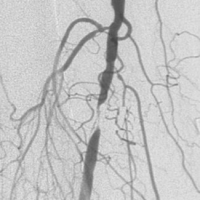
Aortic dissection is not predicted by diameter alone: hypertension, genetics, aortic geometry, pregnancy, medications, sleep apnea, inflammation, and environmental triggers all reshape individual risk. The full paper is worth reading because it maps where classic thresholds fail — and where modern risk stratification may prevent missed catastrophic events.
Human-verified editorial review
Verified by World ID proof-of-human. This editorial layer was submitted from a SAIMSARA account verified as a unique human.
Abstract: This review aims to synthesize the diverse clinical, genetic, environmental, and anatomical risk factors associated with the development, propagation, and prognosis of aortic dissection based on recent cohort and case-control evidence. The review utilises 191 references. Across the mapped evidence, uncontrolled hypertension emerged as the most prominent and consistently replicated modifiable signal for aortic dissection, accounting for more than 50% of the population-attributable risk and supported by hazard ratios such as 2.64 for incident dissection in population cohorts. Smoking, older age, male sex, family history (relative risk 6.82), and syndromic predisposition including Marfan syndrome (present in 44% of necropsy dissection cases), bicuspid aortic valve (9–18-fold excess risk), and ACTA2 mutations (76% lifetime aortic-event risk) further dominated the topic-level synthesis. The map also highlighted that a substantial share of dissections occur below the conventional 5.5 cm surgical threshold (with one series reporting 80.4% dissecting below 55 mm), supporting a role for geometric, length-based, volumetric, and polygenic risk metrics alongside diameter for refined stratification. Recurrent secondary signals included malperfusion, persistent false lumen patency, elevated D-dimer and inflammatory composites, renal dysfunction, pregnancy, fluoroquinolone and vascular endothelial growth factor inhibitor exposures, sleep-disordered breathing, and environmental triggers such as low ambient temperature and air pollution, all of which indicate clinically actionable pharmacovigilance, perioperative, and public-health touchpoints. A practical implication is that risk assessment and surveillance pathways should integrate blood-pressure variability, anatomical and genomic indices, and exposure history rather than relying on diameter alone, particularly in women and non-syndromic patients. Future research should prioritize prospective validation of geometric and polygenic predictors, mechanistic clarification of the diabetes paradox, and longitudinal evaluation of environmental and pharmacological triggers to resolve the heterogeneity observed across the predominantly retrospective evidence base.
Final search date and database lock: 2026-04-26 16:52:17 CEST
Plan: Pro (expanded craft tokens; source: PubMed)
Source: PubMed
Total Abstracts/Papers: 2466
Downloaded Abstracts/Papers: 2466
Included original and non-original Abstracts/Papers (all): 1467
Included original Abstracts/Papers (Vote counting by direction of effect): 1366
Reference Index (links used in paper): 191
Total participants (topic deduplicated ΣN): 10835367
Get access to the full paper
Unlock the full evidence map
The full evidence review, including the Introduction, Methods, Results, Discussion, Conclusion, figures, and complete reference index, opens after purchase or sign-in.
The Evidence Object JSON is a separate machine-readable evidence product: a concentrated synthesis of results, topic-level evidence, and discussion across original and non-original studies. It can be directly input into your LLM, agent, or RAG workflow.
[10] Type B Aortic Dissection Secondary to Non-typhoidal Salmonella Aortitis: A Case Report and Literature Review. — https://doi.org/10.55729/2000-9666.1419
[42] Oral fluoroquinolones and risk of aortic aneurysm or dissection: A nationwide population-based propensity score-matched cohort study. — https://doi.org/10.1002/phar.2841
[43] Risk Factors for Mortality From Aortic Aneurysm and Dissection: Results From a 26-Year Follow-Up of a Community-Based Population. — https://doi.org/10.1161/jaha.122.027045
[66] Risk factors for distal stent graft-induced new entry tear after endovascular repair of thoracic aortic dissection. — https://doi.org/10.1016/j.jvs.2018.07.086
[70] Acute aortic dissection and pregnancy: Review and meta-analysis of incidence, presentation, and pathologic substrates. — https://doi.org/10.1111/jocs.14305
[80] Causal association between modifiable risk factors and aortic aneurysm and aortic dissection: A comprehensive Mendelian randomization study. — https://doi.org/10.1097/md.0000000000043134
[105] Systematic review and meta-analysis of the risk factors for postoperative delirium in patients with acute type A aortic dissection. — https://doi.org/10.21037/jtd-23-10
[118] Retrograde Type A Aortic Dissection After Thoracic Endovascular Aortic Repair: A Systematic Review and Meta-Analysis. — https://doi.org/10.1161/jaha.116.004649
[120] Prevalence and development of aortic dilation and dissection in women with Turner syndrome: a systematic review and meta-analysis. — https://doi.org/10.1080/14779072.2023.2172403
[143] Risk factor analysis and prediction of acute postoperative lung injury after type A aortic dissection. — https://doi.org/10.1159/000548374
[145] Risk factors of pre-operational aortic rupture in acute and subacute Stanford type A aortic dissection patients. — https://doi.org/10.21037/jtd.2017.11.59
[159] Risk factors for descending aortic aneurysm formation in medium-term follow-up of patients with type A aortic dissection. — https://doi.org/10.1378/chest.124.3.989
[161] A Parametric Study on Factors Influencing the Onset and Propagation of Aortic Dissection Using the Extended Finite Element Method. — https://doi.org/10.1109/tbme.2021.3056022
[168] Nonsyndromic Thoracic Aortic Aneurysm and Dissection: Outcomes With Marfan Syndrome Versus Bicuspid Aortic Valve Aneurysm. — https://doi.org/10.1016/j.jacc.2015.11.039
[172] Aortic diameter predicts acute type A aortic dissection in patients with Marfan syndrome but not in patients without Marfan syndrome. — https://doi.org/10.1016/j.jtcvs.2013.05.025
[186] The Relationships of Air Pollution and Meteorological Factors with Acute Aortic Dissection in Urumqi, China: A Distributed Lag Nonlinear Model Analysis. — https://doi.org/10.2147/jmdh.s509228
[216] The role of the angle of the ascending aortic curvature on the development of type A aortic dissection: ascending aortic angulation and dissection. — https://doi.org/10.1093/icvts/ivz144
[228] Should the distal tears of aortic dissection be treated? The risk of distal tears after proximal repair of aortic dissection. — https://doi.org/10.1016/j.ijcard.2018.01.028
[255] Emergency 33-Week Cesarean Section With 3.4 cm Type A Aortic Dissection Repair in a Patient With Marfan Syndrome: A Multidisciplinary Approach. — https://doi.org/10.7759/cureus.84648
[274] Contemporary results of surgery in acute type A aortic dissection: The International Registry of Acute Aortic Dissection experience. — https://doi.org/10.1016/j.jtcvs.2004.09.005
[288] Poor management of hypertension is an important precipitating factor for the development of acute aortic dissection. — https://doi.org/10.1111/jch.13556
[298] Investigating long-term risk of aortic aneurysm and dissection from fluoroquinolones and the key contributing factors using machine learning methods. — https://doi.org/10.1038/s41598-025-97787-6
[301] Computed Tomography-Based Morphometric Analysis of the Ascending Aorta in Acute Type A Dissection Beyond Diameter-Based Thresholds: A National Cohort Study from Latvia. — https://doi.org/10.3390/medsci14020204
[312] Editor's Choice - Long-term Survival and Risk Analysis in 136 Consecutive Patients With Type B Aortic Dissection Presenting to a Single Centre Over an 11 Year Period. — https://doi.org/10.1016/j.ejvs.2018.08.042
[330] Mortality in patients with acute aortic dissection type A: analysis of pre- and intraoperative risk factors from the German Registry for Acute Aortic Dissection Type A (GERAADA). — https://doi.org/10.1093/ejcts/ezv356
[331] Impact of initial aortic diameter and false-lumen area ratio on Type B aortic dissection prognosis. — https://doi.org/10.1093/icvts/ivx286
[336] Effects of age, elastin density, and glycosaminoglycan accumulation on the delamination strength of human thoracic and abdominal aortas. — https://doi.org/10.1016/j.actbio.2024.10.010
[387] Utility of Computational Modeling in Reassessing the Threshold for Intervention and Progression into Type A Aortic Dissection. — https://doi.org/10.3390/biomedicines14030696
[398] Risk factors for thoracic aortic aneurysm and dissection among diabetic patients: a nationwide population-based study. — https://doi.org/10.3389/fcvm.2025.1569886
[414] Population-based study of incidence and outcome of acute aortic dissection and premorbid risk factor control: 10-year results from the Oxford Vascular Study. — https://doi.org/10.1161/circulationaha.112.000483
[423] Neurological event rates and associated risk factors in acute type B aortic dissections treated by thoracic aortic endovascular repair. — https://doi.org/10.1016/j.jtcvs.2022.02.007
[469] Association Between Diet Quality, Physical Activity, and the Risk of Aortic Dissection-A Prospective Cohort Study. — https://doi.org/10.3390/jcdd13030142
[514] Postoperative Prognostic Nutritional Index and Fibrinogen Could Well Predict Poor Prognosis of Acute Type A Aortic Dissection Patients After Surgery. — https://doi.org/10.21470/1678-9741-2022-0185
[541] Risk factor analysis of postoperative acute respiratory distress syndrome after type A aortic dissection repair surgery. — https://doi.org/10.1097/md.0000000000016303
[544] Independent risk factors for postoperative AKI and the impact of the AKI on 30-day postoperative outcomes in patients with type A acute aortic dissection: an updated meta-analysis and meta-regression. — https://doi.org/10.21037/jtd.2018.05.47
[570] Inflammasome Targeted Therapy as Novel Treatment Option for Aortic Aneurysms and Dissections: A Systematic Review of the Preclinical Evidence. — https://doi.org/10.3389/fcvm.2021.805150
[593] Efficiency of atorvastatin on in-hospital mortality of patients with acute aortic dissection (AAD): study protocol for a randomized, open-label, superiority clinical trial. — https://doi.org/10.1186/s13063-021-05237-1
[600] Nationwide analysis of the relationship between low ambient temperature and acute aortic dissection-related hospitalizations. — https://doi.org/10.1093/eurjpc/zwae278
[606] Risk factors for acute kidney injury after Stanford type A aortic dissection repair surgery: a systematic review and meta-analysis. — https://doi.org/10.1080/0886022x.2022.2113795
[611] Evaluating the monogenic contribution and genotype-phenotype correlation in patients with isolated thoracic aortic aneurysm. — https://doi.org/10.1038/s41431-021-00857-2
[621] Do fluoroquinolones increase aortic aneurysm or dissection incidence and mortality? A systematic review and meta-analysis. — https://doi.org/10.3389/fcvm.2022.949538
[631] Risk profiles for aortic dissection and ruptured or surgically treated aneurysms: a prospective cohort study. — https://doi.org/10.1161/jaha.114.001513
[636] Association of polymorphisms in FBN1, MYH11, and TGF-β signaling-related genes with susceptibility of sporadic thoracic aortic aneurysm and dissection in the Zhejiang Han population. — https://doi.org/10.1515/med-2024-1025
[638] Prognostic impact of the metabolic syndrome and its components in acute type a aortic dissection after surgery: a retrospective study. — https://doi.org/10.1186/s13019-024-03123-w
[647] Retrograde type A dissection in the Vascular Quality Initiative thoracic endovascular aortic repair for dissection postapproval project. — https://doi.org/10.1016/j.jvs.2021.11.075
[729] Metabolic syndrome and its components are associated with hypoxemia after surgery for acute type A aortic dissection: an observational study. — https://doi.org/10.1186/s13019-022-01901-y
[766] The correlation between obstructive sleep apnea-hypopnea syndrome and postoperative distal expansion of type A aortic dissection. — https://doi.org/10.1016/j.jvs.2025.05.210
[771] Metabolic Syndrome and Its Components are Associated with In-Hospital Complications after Thoracic Endovascular Aortic Repair for Acute Type B Aortic Dissection. — https://doi.org/10.1016/j.avsg.2023.01.012
[792] The elevated admission white blood cell count relates to adverse surgical outcome of acute Stanford type a aortic dissection. — https://doi.org/10.1186/s13019-020-1078-5
[812] The impact of malperfusion patterns in elderly patients undergoing surgery for acute type A aortic dissection. — https://doi.org/10.1093/ejcts/ezad288
[824] The Value of Different Systemic Inflammatory Response Indicators in the Long-term Prognosis of Type B Aortic Dissection Patients Undergoing Thoracic Endovascular Aortic Repair. — https://doi.org/10.1177/15266028241305953
[835] Influence of Body Mass Index on Outcomes of Patients Undergoing Surgery for Acute Aortic Dissection: A Propensity-Matched Analysis. — https://doi.org/10.14503/thij-17-6365
[836] The Impact of Blood Pressure Rhythm and Perioperative Blood Pressure Variability on Short-Term Prognosis in Patients with Type A Aortic Dissection. — https://doi.org/10.12968/hmed.2024.0344
[841] A systematic review and meta-analysis of retrograde type A aortic dissection after thoracic endovascular aortic repair in patients with type B aortic dissection. — https://doi.org/10.1097/md.0000000000032944
[844] Angiotensin-converting enzyme I/D polymorphism and the risk of thoracic aortic dissection in Chinese Han population. — https://doi.org/10.1007/s11033-012-2167-x
[850] Incidence and Mortality Rates of Thoracic Aortic Dissection in Korea - Inferred from the Nationwide Health Insurance Claims. — https://doi.org/10.3346/jkms.2020.35.e360
[907] Admission D-dimer to lymphocyte counts ratio as a novel biomarker for predicting the in-hospital mortality in patients with acute aortic dissection. — https://doi.org/10.1186/s12872-023-03098-x
[938] Fate of the unoperated ascending thoracic aortic aneurysm: three-decade experience from the Aortic Institute at Yale University. — https://doi.org/10.1093/eurheartj/ehad148
[951] The relationship between uric acid and in-hospital mortality in patients with type A acute aortic dissection: A retrospective single-center study. — https://doi.org/10.1016/j.asjsur.2023.08.036
[1000] The impact of postoperative acute kidney injury on survival after surgery for type A aortic dissection repair: Results from over 6000 patients. — https://doi.org/10.1177/02676591261434930
[1001] Association of biomarkers related to preoperative inflammatory and coagulation with postoperative in-hospital deaths in patients with type A acute aortic dissection. — https://doi.org/10.1038/s41598-021-98298-w
[1070] Prognostic significance of neutrophil count on in-hospital mortality in patients with acute type A aortic dissection. — https://doi.org/10.3389/fcvm.2023.1095646
[1082] Low temperature and temperature decline increase acute aortic dissection risk and burden: A nationwide case crossover analysis at hourly level among 40,270 patients. — https://doi.org/10.1016/j.lanwpc.2022.100562
[1089] Risk factors for postoperative delirium in patients with Stanford type A aortic dissection: a systematic review and meta-analysis. — https://doi.org/10.1186/s13019-024-02485-5
[1119] Long-term survival in patients presenting with type A acute aortic dissection: insights from the International Registry of Acute Aortic Dissection (IRAD). — https://doi.org/10.1161/circulationaha.105.000497
[1157] Prognostic nutritional index predicts in-hospital mortality in patients with acute Stanford type A aortic dissection. — https://doi.org/10.1177/0267659120961937
[1217] Surgical management and outcomes of coronary artery involvement secondary to acute type A aortic dissection: a retrospective cohort study. — https://doi.org/10.21037/jtd-23-990
[1261] Significant Prediction of In-hospital Major Adverse Events by D-Dimer Level in Patients With Acute Type A Aortic Dissection. — https://doi.org/10.3389/fcvm.2022.821928
[1323] The blood glucose-potassium ratio at admission predicts in-hospital mortality in patients with acute type A aortic dissection. — https://doi.org/10.1038/s41598-023-42827-2
[1408] Age at diagnosis influences the clinical phenotype, treatment strategies and outcomes in patients with giant cell arteritis: results from the observational GCAGE study on a large cohort of 1004 patients. — https://doi.org/10.1136/ard-2023-223895