
SAIMSARA Journal

Machine Generated Science • ISSN 3054-3991

Cannabis and Cardiovascular Risk: Scoping Review with ☸️SAIMSARA.

Cardiac & Vascular Health icon

Cardiac & Vascular Health

Issue 1, Volume 1, 2026

DOI: 10.62487/saimsara242a8e10

Editorial note
• Last update: 2026-05-15 10:03:43
What is this paper about
Cannabis is no longer a peripheral cardiovascular question: this evidence map shows repeated risk signals for MI, stroke, arrhythmias, perioperative events, vascular stiffness, and acute THC-driven hemodynamic stress, while also separating mixed or null findings for hypertension and atrial fibrillation. The full SAIMSARA evidence map is worth reading because it organizes 259 original studies into clinically usable risk patterns across daily use, CUD, medical cannabis, CBD, synthetic cannabinoids, pregnancy, young ACS patients, surgery, and vulnerable cardiovascular populations.
Human-verified editorial review Verified by World ID proof-of-human. This editorial layer was submitted from a SAIMSARA account verified as a unique human.

Evidence preview · Did you know?
Medical illustration of cannabis exposure connected with heart attack, stroke, and cardiovascular risk signals.

Not just isolated case reports

Did you know? In 434,104 US adults, daily cannabis use was associated with higher odds of MI, stroke, and composite cardiovascular outcomes.

The signal was clinically visible: aOR 1.25 for MI, 1.42 for stroke, and 1.28 for a composite cardiovascular outcome.

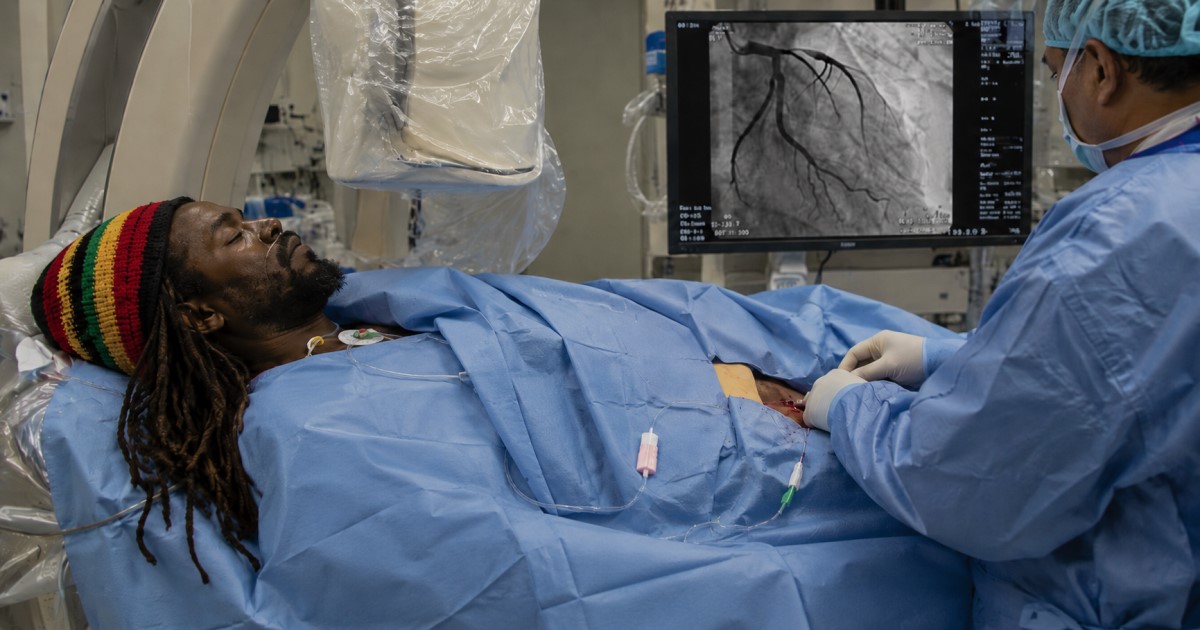
Clinical cannabis authorization scene with cardiovascular monitoring and arrhythmia risk signals.

Medical use is not automatically neutral

Did you know? Medical cannabis authorization was linked to more ED or hospital events for ACS or stroke.

Another prescribed-cannabis cohort in chronic pain found higher new-onset arrhythmia risk within 180 days.

Clinician reviewing cannabis cardiovascular risk map with mixed positive and null evidence signals.

The map is not one-sided

Did you know? Major cohorts found no clear signal for incident hypertension or incident atrial fibrillation.

That is the clinically important gap: cannabis risk depends on dose, timing, product type, endpoint, and patient vulnerability.

Swipe sideways on mobile · full evidence map opens after unlock

Abstract: To map and synthesize original research on cannabis, cannabinoids, and cardiovascular outcomes or physiology, emphasizing recurrent clinical associations, mechanistic themes, vulnerable populations, and implications for cardiovascular risk assessment. The review uses 139 references and builds its evidence map from 259 original studies with 284901911 total participants/sample observations (topic-deduplicated ΣN). Across the included original studies, cannabis exposure—particularly daily use, cannabis use disorder, and recent use—was associated with higher signals for myocardial infarction, stroke, and composite cardiovascular events, with adjusted odds of 1.25 for MI and 1.42 for stroke in a large US adult sample. This dominant message was reinforced by perioperative, acute-care, and young-adult ACS cohorts, while findings for incident hypertension and atrial fibrillation remained mixed, including a null UK Biobank signal for incident AF (HR 0.98). Acute human experimental data showing THC-related increases in heart rate, blood pressure, and arterial stiffness provide biological plausibility for these population-level associations. The evidence base supports incorporating cannabis exposure into cardiovascular risk conversations, though confounding and heterogeneous exposure definitions limit causal certainty. Future prospective studies with harmonized cannabis phenotyping and cardiovascular endpoints are needed to clarify whether observed associations reflect modifiable risk.

Keywords: Cannabis use; Cardiovascular disease; Cannabis use disorder; Myocardial infarction; Stroke; Atrial fibrillation; Hypertension; Atherosclerosis; THC; Arterial stiffness

Review Stats

Get access to the full paper

Unlock the full evidence map

The full evidence review, including the Introduction, Methods, Results, Discussion, Conclusion, figures, and complete reference index, opens after purchase or sign-in. The Evidence Object JSON is a separate machine-readable evidence product: a concentrated synthesis of results, topic-level evidence, and discussion across original and non-original studies. It can be directly input into your LLM, agent, or RAG workflow.

Reference Index (139)