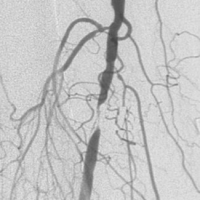
This review shows that PAD diagnostics are shifting beyond resting ABI toward a multimodal future: post-exercise testing, advanced imaging, biomarkers, and AI repeatedly signal earlier and more precise detection, especially in patients where standard methods fail, such as those with diabetes. Read the full paper to see which emerging tools look truly promising, where the evidence is strongest, and which “innovations” still lack the validation needed for routine practice.
Abstract: The aim of this paper is to systematically review and synthesize the current landscape of diagnostic approaches for peripheral artery disease, identifying emerging technologies and biomarkers that offer enhanced accuracy, sensitivity, and clinical utility. The review utilises 113 original studies with 548377 total participants (topic deduplicated ΣN). This scoping review indicates a broad and rapidly expanding diagnostic landscape for PAD in which newer physiologic testing (notably post-exercise strategies), advanced imaging, circulating/urinary biomarker panels, and AI-enabled analytics recurrently signal improved detection and phenotyping compared with conventional approaches. Across the evidence map, a consistent theme is moving beyond single resting indices toward multi-parameter assessment of perfusion, ischemia, and vascular pathology, with several modalities positioned as non-invasive or point-of-care candidates for earlier identification in higher-risk groups such as people with diabetes. At the same time, interpretation is constrained by substantial heterogeneity in index tests, thresholds, and reference standards and by the absence of formal risk-of-bias appraisal in this scoping design. Clinically, the mapped evidence supports considering stepwise, multimodal diagnostic pathways that combine physiologic testing with targeted imaging and adjunct biomarkers where ABI is limited, while research priorities include standardized thresholds and prospective multicenter validation—particularly for AI models and emerging biomarkers—before routine adoption.
Keywords: Peripheral artery disease diagnosis; Ankle-brachial index; Biomarkers for PAD; Medical imaging diagnostics; Artificial intelligence in diagnosis; Vascular calcification assessment; Ischemia classification; Transcutaneous oxygen pressure; Microvascular disease; Foot-toe glucose index
Review Stats
Final search date and database lock: 2026-03-09 23:19:52 CET
Plan: Pro (expanded craft tokens; source: Semantic Scholar)
Source: Semantic Scholar
Total Abstracts/Papers: 933
Downloaded Abstracts/Papers: 933
Included original and non-original Abstracts/Papers (all): 150
Included original Abstracts/Papers (Vote counting by direction of effect): 113
Reference Index (links used in paper): 75
Total participants (topic deduplicated ΣN): 548377
Get access to the full paper
Unlock the full evidence map
The full evidence review, including the Introduction, Methods, Results, Discussion, Conclusion, figures, and complete reference index, opens after purchase or sign-in.
The Evidence Object JSON is a separate machine-readable evidence product: a concentrated synthesis of results, topic-level evidence, and discussion across original and non-original studies. It can be directly input into your LLM, agent, or RAG workflow.
[2] Integrating Artificial Intelligence and Imaging in Peripheral Artery Disease: A Systematic Review from Diagnostics to Guided Endovascular Therapy — https://doi.org/10.63332/joph.v5i12.3742
[5] Inflammatory Protein Panel: Exploring Diagnostic Insights for Peripheral Artery Disease Diagnosis in a Cross-Sectional Study — https://doi.org/10.3390/diagnostics14171847
[6] The Value of Infrared Thermography to Assess Foot and Limb Perfusion in Relation to Medical, Surgical, Exercise or Pharmacological Interventions in Peripheral Artery Disease: A Systematic Review — https://doi.org/10.3390/diagnostics12123007
[7] Diagnosis of disease affecting gait with a body acceleration-based model using reflected marker data for training and a wearable accelerometer for implementation — https://doi.org/10.1038/s41598-023-50727-8
[8] Artificial Intelligence Identifies an Urgent Need for Peripheral Vascular Intervention by Multiplexing Standard Clinical Parameters — https://doi.org/10.3390/biomedicines9101456
[11] Artificial Intelligence Evidence-Based Current Status and Potential for Lower Limb Vascular Management — https://doi.org/10.3390/jpm11121280
[15] Current Applications and Future Perspectives of Artificial and Biomimetic Intelligence in Vascular Surgery and Peripheral Artery Disease — https://doi.org/10.3390/biomimetics9080465
[19] NIR-II imaging-based detection of early changes in lower limb perfusion in type 2 diabetes patients without peripheral artery disease. — https://doi.org/10.1016/j.diabres.2025.112038
[20] A narrative review of imaging misallocation in peripheral artery disease: a value-based medicine perspective — https://doi.org/10.21037/cdt-2025-426
[22] The Association Between Triglyceride-Glucose Index and Its Combination with Obesity Indicators and Lower Extremity Peripheral Artery Disease in Patients with Type 2 Diabetes Mellitus: A Cross-Sectional Study — https://doi.org/10.2147/dmso.s469692
[25] The resistive and pulsatility indices of the dorsal metatarsal artery for the screening of peripheral lower artery disease in patients with and without diabetes. — https://doi.org/10.1016/j.diabres.2024.111732
[27] Effectiveness of bedside investigations to diagnose peripheral artery disease among people with diabetes mellitus: A systematic review — https://doi.org/10.1002/dmrr.3683
[28] A Systematic Review of Interleukins as Diagnostic and Prognostic Biomarkers for Peripheral Artery Disease — https://doi.org/10.3390/biom13111640
[29] Post-Exercise Ankle–Brachial Index Is Reduced in Healthy, Young Individuals at a Level Indicating Peripheral Artery Disease — https://doi.org/10.3390/clinpract13020049
[30] A novel, microvascular evaluation method and device for early diagnosis of peripheral artery disease and chronic limb-threatening ischemia in individuals with diabetes — https://doi.org/10.1016/j.jvscit.2023.101101
[31] Remnant cholesterol is independently asssociated with an increased risk of peripheral artery disease in type 2 diabetic patients — https://doi.org/10.3389/fendo.2023.1111152
[35] Diagnostic methods for measurement of peripheral blood flow during exercise in patients with type 2 diabetes and peripheral artery disease: a systematic review. — https://doi.org/10.23736/s0392-9590.18.04051-8
[40] Comparison of resting/postexercise ankle-brachial index and transcutaneous partial pressure of oxygen for noninvasive diagnosis of peripheral artery disease in type 2 diabetes mellitus. — https://doi.org/10.1016/j.mjafi.2020.11.002
[44] The Use of Near Infrared Spectroscopy to Evaluate the Effect of Exercise on Peripheral Muscle Oxygenation in Patients with Lower Extremity Artery Disease: A Systematic Review. — https://doi.org/10.1016/j.ejvs.2021.02.008
[47] Combination of the ankle-brachial index and percentage of mean arterial pressure to improve diagnostic sensitivity for peripheral artery disease — https://doi.org/10.1097/md.0000000000012644
[48] Disease-specific characteristics of vascular cell adhesion molecule-1 levels in patients with peripheral artery disease — https://doi.org/10.1007/s00380-018-1315-1
[50] Galectin-3 in Peripheral Artery Disease. Relationships with Markers of Oxidative Stress and Inflammation — https://doi.org/10.3390/ijms18050973
[59] An evaluation of inflammatory and endothelial dysfunction markers as determinants of peripheral arterial disease in those with diabetes mellitus — https://doi.org/10.1038/s41598-024-65188-w
[66] The Use of Pressure Indices, Such as Fractional Flow Reserve, in Peripheral Arterial Disease-A Review of Current Literature and Potential Prospects — https://doi.org/10.1177/15385744251394835
[67] Comparison Between Below Knee Contrast Enhanced Tomographic 3D Ultrasound and CT, MR or Catheter Angiography for Peripheral Artery Imaging. — https://doi.org/10.1016/j.ejvs.2020.10.007
[73] Validation of ICD-10 Codes to Distinguish Between Claudication and Chronic Limb-Threatening Ischemia in Patients Undergoing Peripheral Vascular Intervention Using Medicare-Matched Registry Data. — https://doi.org/10.1161/circoutcomes.124.011467
[74] Multispectral optoacoustic tomography of peripheral arterial disease based on muscle hemoglobin gradients—a pilot clinical study — https://doi.org/10.21037/atm-20-3321
[75] Relationship Between Physical Performance and Peripheral Arterial Diseases in Different Age Groups of Chinese Community-Dwelling Older Adults — https://doi.org/10.5551/jat.63697
[77] Estimating the diagnostic accuracy of the ankle–brachial pressure index for detecting peripheral arterial disease in people with diabetes: A systematic review and meta‐analysis — https://doi.org/10.1111/dme.14379
[88] Diagnostic Confidence of Run-Off CT-Angiography as the Primary Diagnostic Imaging Modality in Patients Presenting with Acute or Chronic Peripheral Arterial Disease — https://doi.org/10.1371/journal.pone.0119900
[92] The diagnostic and prognostic value of red cell distribution width in cardiovascular disease; current status and prospective — https://doi.org/10.1002/biof.1518
[96] Vector Flow Imaging Compared with Digital Subtraction Angiography for Stenosis Assessment in the Superficial Femoral Artery – A Study of Vector Concentration, Velocity Ratio and Stenosis Degree Percentage — https://doi.org/10.1055/a-0853-2002
[98] Rapid and automated risk stratification by determination of the aortic stiffness in healthy subjects and subjects with cardiovascular disease — https://doi.org/10.1371/journal.pone.0216538
[102] A systematic review of duplex ultrasound, magnetic resonance angiography and computed tomography angiography for the diagnosis and assessment of symptomatic, lower limb peripheral arterial disease. — https://doi.org/10.3310/hta11200
[104] An LDLR missense variant poses high risk of familial hypercholesterolemia in 30% of Greenlanders and offers potential of early cardiovascular disease intervention — https://doi.org/10.1016/j.xhgg.2022.100118
[114] Initial Operating Room Experience with Digital Variance Angiography in Carbon Dioxide-Assisted Lower Limb Interventions: A Pilot Study — https://doi.org/10.1007/s00270-020-02530-5
[115] Transcutaneous Exercise Oximetry for Patients With Claudication - A Retrospective Review of Approximately 5,000 Consecutive Tests Over 15 Years. — https://doi.org/10.1253/circj.cj-17-0948
[126] Circulating MicroRNA-4739 May Be a Potential Biomarker of Critical Limb Ischemia in Patients with Diabetes — https://doi.org/10.1155/2018/4232794
[128] Automated oscillometric blood pressure and pulse-wave acquisition for evaluation of vascular stiffness in atherosclerosis — https://doi.org/10.1007/s00392-017-1080-7
[135] Transcutaneous Oxygen Tension as a Potential Predictor of Cardiovascular Events in Type 2 Diabetes — https://doi.org/10.2337/dc12-1401