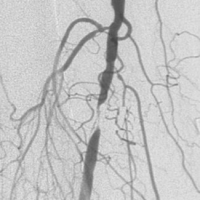
Iliac artery endofibrosis is a hidden performance-limiting vascular disease of endurance athletes, often missed by resting tests but revealed by post-exercise hemodynamics and dynamic imaging. The full SAIMSARA evidence map gives clinicians, researchers, and LLM agents a structured, reference-linked view of diagnosis, mechanisms, open surgery, endovascular limits, and return-to-sport outcomes — ready for human reading and machine reasoning.
Human-verified editorial review
Verified by World ID proof-of-human. This editorial layer was submitted from a SAIMSARA account verified as a unique human.
Abstract: The aim of this review is to synthesize current evidence regarding the pathophysiology, diagnostic modalities, and therapeutic interventions for external iliac artery endofibrosis in athletic populations. The review utilises 52 original studies with 1226 total participants (topic deduplicated ΣN). The mapped evidence indicates that iliac artery endofibrosis is a mechanistically distinct, non-atheromatous arteriopathy of endurance athletes in which provocative testing—most prominently a 1-minute post-exercise ABI cutoff of 0.66 (sensitivity 90%, specificity 87%) and a between-leg ABPI difference of 0.18—emerges as the most consistent diagnostic signal. Open surgical management, particularly endarterectomy with autologous patch angioplasty, was repeatedly associated with durable benefit, including 85% symptom resolution at a median 25.2-month follow-up and long-term satisfaction of 91.7% after a median 11.1-year follow-up in a 68-patient/79-leg athlete cohort. Recurrent topic-level signals support dynamic kinking around the iliofemoral flexion point, histopathology dominated by loose connective tissue and elevated collagen, elastin, and PAR1/PAR4 expression, and adjunctive value from duplex ultrasound, IVUS, pedal-power measurement, and NIRS in selected diagnostic scenarios. In contrast, endovascular approaches showed mixed durability, with balloon angioplasty alone often providing only temporary relief, suggesting that lesion- and athlete-specific selection remains central to treatment planning. Clinically, this supports maintaining a high index of suspicion in symptomatic endurance athletes with normal resting studies and prioritizing post-exercise hemodynamic testing before advanced imaging. Future work should focus on standardized exercise-provocation protocols, prospective comparative studies of open versus endovascular reconstruction, and mechanistic investigation of vasospasm and protease-mediated signaling to clarify pharmacological and surveillance strategies for early-stage disease.
Final search date and database lock: 2026-05-02 20:27:15 CEST
Plan: Pro (expanded craft tokens; source: PubMed)
Source: PubMed
Total Abstracts/Papers: 97
Downloaded Abstracts/Papers: 97
Included original and non-original Abstracts/Papers (all): 59
Included original Abstracts/Papers (Vote counting by direction of effect): 52
Reference Index (links used in paper): 52
Total participants (topic deduplicated ΣN): 1226
Get access to the full paper
Unlock the full evidence map
The full evidence review, including the Introduction, Methods, Results, Discussion, Conclusion, figures, and complete reference index, opens after purchase or sign-in.
The Evidence Object JSON is a separate machine-readable evidence product: a concentrated synthesis of results, topic-level evidence, and discussion across original and non-original studies. It can be directly input into your LLM, agent, or RAG workflow.
[9] Short- and long-term outcomes after endarterectomy with autologous patching in endurance athletes with iliac artery endofibrosis. — https://doi.org/10.1016/j.jvs.2023.03.501
[10] Diagnostic Approach and Management of Iliac Artery Endofibrosis in Athletes: A Scoping Review. — https://doi.org/10.5758/vsi.250029
[16] Histopathological comparison between endofibrosis of the high-performance cyclist and atherosclerosis in the external iliac artery. — https://doi.org/10.1016/j.jvs.2008.07.057
[21] Functional magnetic resonance angiography in the diagnosis of iliac artery endofibrosis in an endurance runner. — https://doi.org/10.1136/bcr-2019-232112
[31] Evaluation of the arterial kink point during flexion of the hip: A dynamic angiographic study in iliac endofibrosis patients. — https://doi.org/10.1007/s00276-024-03357-2
[32] Protease-activated receptors are potential regulators in the development of arterial endofibrosis in high-performance athletes. — https://doi.org/10.1016/j.jvs.2018.05.220
[34] Endofibrosis as a Causative Agent of the Peripheral Artery Disease: A Report of Two Cases for Professional Cyclists. — https://doi.org/10.7759/cureus.31406
[41] Obstructive external iliac arteriopathy in avid bicyclists: new and variable histopathologic features in four women. — https://doi.org/10.1067/mva.2002.126558
[45] Test-retest reliability of skeletal muscle oxygenation measurement using near-infrared spectroscopy during exercise in patients with sport-related iliac artery flow limitation. — https://doi.org/10.1111/cpf.12738
[46] Endurance athletes with intermittent claudication caused by iliac artery stenosis treated by endarterectomy with vein patch--short- and mid-term results. — https://doi.org/10.1016/j.ejvs.2012.01.004
[50] Comparison between duplex scanning and angiographic findings in the evaluation of functional iliac obstruction in top endurance athletes. — https://doi.org/10.1016/j.ejvs.2004.08.008
[57] Arterial endofibrosis in endurance athletes: Prospective comparison of the diagnostic accuracy of intra-arterial digital subtraction angiography and computed tomography angiography. — https://doi.org/10.1016/j.diii.2020.03.003