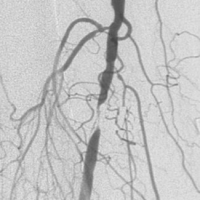
This review shows that PAD bypass outcomes are driven less by the operation alone than by who the patient is going into it: dialysis, CKD, conduit choice, and post-operative management repeatedly shape survival, limb outcomes, and graft durability. The full read is worth it because it clarifies where bypass still holds its strongest advantage over endovascular therapy, which patients benefit most, and which risk signals should change decisions before and after surgery.
Additional notes
During editorial revision, the original CASPAR trial was added (e1) to directly support the DAPT statement; the previously cited post hoc analysis ([1]) was retained as comparative context.
Abstract: This paper aims to systematically synthesize the current evidence on bypass surgery for peripheral artery disease, focusing on key outcomes, prognostic factors, and comparisons with alternative treatment modalities, as extracted from a structured summary of scientific literature. The review utilises 144 original studies with 663925 total participants (topic deduplicated ΣN). This scoping review indicates that outcomes after PAD bypass surgery are strongly patterned by baseline patient risk, with chronic kidney disease and especially hemodialysis status emerging as a prominent signal for worse survival and major adverse events across the evidence map. Across procedural domains, the literature consistently supports a role for careful treatment selection between bypass and endovascular approaches, with bypass often associated with durable patency in complex disease while endovascular strategies may reduce short-term resource use but can require more reinterventions in some settings. Conduit choice and post-operative management recur as practical determinants of success, with autologous vein preference, optimized antithrombotic/medical therapy, and structured surveillance and rehabilitation repeatedly linked to better limb and graft-related trajectories. Interpretation is limited by the scoping, LLM-assisted, and non–risk-of-bias–appraised nature of the workflow, which prioritizes evidence mapping over causal estimation. Clinically, the findings highlight the need for intensified preoperative risk stratification and longitudinal follow-up in high-risk groups, while research should focus on phenotype-specific comparative effectiveness studies that align technique, conduit, and medical therapy to patient risk profiles.
Final search date and database lock: 2026-03-09 22:00:58 CET
Plan: Pro (expanded craft tokens; source: Semantic Scholar)
Source: Semantic Scholar
Total Abstracts/Papers: 1118
Downloaded Abstracts/Papers: 1000
Included original and non-original Abstracts/Papers (all): 187
Included original Abstracts/Papers (Vote counting by direction of effect): 144
Reference Index (links used in paper): 82
Total participants (topic deduplicated ΣN): 663925
Get access to the full paper
Unlock the full evidence map
The full evidence review, including the Introduction, Methods, Results, Discussion, Conclusion, figures, and complete reference index, opens after purchase or sign-in.
The Evidence Object JSON is a separate machine-readable evidence product: a concentrated synthesis of results, topic-level evidence, and discussion across original and non-original studies. It can be directly input into your LLM, agent, or RAG workflow.
Reference Index (82)
[1] Efficacy and safety of rivaroxaban versus placebo after lower extremity bypass surgery: A post hoc analysis of a “CASPAR like” outcome from VOYAGER PAD — https://doi.org/10.1002/clc.23926
[2] Comparison of Bypass Surgery Versus Endovascular Interventions for Peripheral Artery Disease Through Systematic Review and Meta-Analysis of Randomized Controlled Trials. — https://doi.org/10.1016/j.jvir.2025.02.005
[4] Long-term prognosis after bypass surgery versus endovascular therapy in chronic hemodialysis patients with peripheral artery disease -10-year follow-up study — https://doi.org/10.1093/eurheartj/ehaf784.3027
[6] Predictors of Surgical Site Infection Following Infra-Inguinal Bypass Surgery: An Analysis of the Vascular Quality Initiative Data. — https://doi.org/10.1016/j.jvs.2025.10.023
[7] The association of chronic obstructive pulmonary disease and 30-day outcomes of infrainguinal bypass surgery: A propensity-score matching study — https://doi.org/10.1177/17085381241269790
[8] Effect of Chronic Steroid Use on Postoperative Wound Complications in Patients Undergoing Arterial Bypass Surgery for Lower Extremity Peripheral Arterial Disease. — https://doi.org/10.1016/j.avsg.2024.04.020
[9] Long-Term Outcome of Lower Extremity Bypass Surgery in Patients with Chronic Kidney Disease and Critical Limb Ischemia in Germany. — https://doi.org/10.1016/j.avsg.2024.06.014
[10] Centers with Vascular Surgery Training Programs Are More Likely to Utilize Vein Mapping and Autologous Vein for Infrainguinal Bypass. — https://doi.org/10.1016/j.jvs.2025.04.072
[13] The Role of TGF-β Signaling in Saphenous Vein Graft Failure after Peripheral Arterial Disease Bypass Surgery — https://doi.org/10.3390/ijms241210381
[15] Conversion of Femoral-Tibial Bypass Surgery into Deep Vein Arterialization in a Patient with Severe Peripheral Artery Disease: Post-Operative Computed Tomography and Angiography Findings — https://doi.org/10.3390/hearts4010002
[16] Long-Term Outcome of Lower Extremity Bypass Surgery in Diabetic and Non-Diabetic Patients with Critical Limb-Threatening Ischaemia in Germany — https://doi.org/10.3390/biomedicines12010038
[20] Endovascular Revascularisation versus Open Surgery with Prosthetic Bypass for Femoro-Popliteal Lesions in Patients with Peripheral Arterial Disease — https://doi.org/10.3390/jcm12185978
[21] Rivaroxaban in Patients with Symptomatic Peripheral Artery Disease after Lower Extremity Bypass Surgery with Venous and Prosthetic Conduits. — https://doi.org/10.1016/j.jvs.2022.11.062
[22] Implementation of Transitional Care Planning is Associated with Reduced Readmission Rates in Patients Undergoing Lower Extremity Bypass Surgery for Peripheral Arterial Disease. — https://doi.org/10.1016/j.jvs.2021.12.029
[23] A Systematic Review and Meta-Analysis to Assess the Impact of Pre-Existing Comorbidities on the 30-Day Readmission after Lower Extremity Bypass Surgery for Peripheral Artery Occlusive Disease. — https://doi.org/10.1016/j.avsg.2022.12.072
[25] Critical appraisal of evidence on bypass surgery versus endovascular treatment for intermittent claudication: a systematic review and meta-analysis. — https://doi.org/10.23736/s0392-9590.21.04791-x
[26] A Novel, Individualized Exercise Program for Patients with Peripheral Arterial Disease Recovering from Bypass Surgery — https://doi.org/10.3390/ijerph16122127
[30] Comparing the Impact of DOACs and Warfarin on Below-the-Knee Autologous Vein Bypass Patency in Peripheral Artery Disease: A Retrospective Cohort Study with 2-Year Follow-Up — https://doi.org/10.3390/jpm15070292
[31] Poor adherence to ultrasound surveillance is associated with infrainguinal bypass graft failure – An ongoing challenge in Australia — https://doi.org/10.1177/17085381241307754
[32] Five-Year Outcomes of the SuperB Trial: A Multicenter Randomized Controlled Trial Comparing Heparin-Bonded Endograft to Surgical Femoropopliteal Bypass — https://doi.org/10.1177/15266028241231520
[33] Female gender is independently associated with longer hospital stays following infra-inguinal bypass for peripheral arterial disease. A retrospective cohort study — https://doi.org/10.1177/17085381241281315
[37] How to Select for Angioplasty or Surgical Bypass in People With Diabetes and Peripheral Arterial Disease. — https://doi.org/10.31083/bjhm50657
[39] Association of Pre-operative Frailty with Inferior Outcomes for Patients Undergoing Lower Extremity Bypass for Chronic Limb Threatening Ischemia: A Systematic Review. — https://doi.org/10.1016/j.avsg.2023.05.044
[41] A systematic review and meta-analysis of sex- and gender-based differences in presentation severity and outcomes in adults undergoing major vascular surgery. — https://doi.org/10.1016/j.jvs.2022.02.030
[43] Underutilization of Medical Management of Peripheral Artery Disease Among Patients with Claudication Undergoing Lower Extremity Bypass. — https://doi.org/10.1016/j.jvs.2022.05.016
[45] Symptomatic Peripheral Artery Disease Increases Risk of Perioperative Following Open Abdominal Aortic Aneurysm Repair. — https://doi.org/10.1016/j.jvs.2023.04.024
[46] Regional variation in the use of revascularisation for peripheral artery disease in Japan: a cross-sectional observational study — https://doi.org/10.1136/bmjopen-2023-076399
[48] Combined predictive value of pre-procedural protein-energy wasting and inflammation status for amputation and/or mortality after lower extremity revascularization in patients on hemodialysis — https://doi.org/10.1093/eurheartj/ehad655.2078
[55] Risk Associated With Female Gender for More Advanced Peripheral Arterial Disease at Time of Femoropopliteal Bypass Remains Constant from 2003 to 2015: PC152. — https://doi.org/10.1016/j.jvs.2018.03.319
[56] Electronic vascular conduit for in situ identification of hemadostenosis and thrombosis in small animals and nonhuman primates — https://doi.org/10.1038/s41467-025-58056-2
[61] Abstract We0079: Single Nuclei Multi-omics Reveal Changes in Transcriptional and Epigenetic Regulation in Skeletal Muscle Following Open Revascularization in CLTI: A Pilot Study — https://doi.org/10.1161/atv.45.suppl_1.we0079
[63] Racial and Ethnic Minority Groups, Female Sex, and Tissue Loss are Associated with Increased Risk for Hospital Readmission Following Revascularization for Chronic Limb-Threatening Ischemia. — https://doi.org/10.1016/j.jvs.2025.05.203
[64] Retrospective Evaluation of the First 150 Patients with Vascular Surgery in A New Cardiovascular Surgery Clinic — https://doi.org/10.15511/ejcm.18.00236
[65] Effectiveness of a New Exercise Program after Lower Limb Arterial Blood Flow Surgery in Patients with Peripheral Arterial Disease: A Randomized Clinical Trial — https://doi.org/10.3390/ijerph110807961
[71] Prognostic value of C-reactive protein / albumin ratio for amputation and/or mortality after lower extremity revascularization in haemodialysis patients with peripheral artery disease — https://doi.org/10.1093/eurheartj/ehae666.3249
[73] Comparison of long-term prognosis between coronary artery disease and peripheral artery disease in haemodialysis and non-dialysis patients — https://doi.org/10.1093/eurheartj/ehae666.2271
[79] Valvulotomy of the great saphenous vein in ex situ non-reversed and in situ setting: a multicenter post-market study to assess the safety and efficacy of the AndraValvulotome™” — https://doi.org/10.1007/s00423-023-03189-5
[80] Saphenous vein harvesting for coronary artery bypass grafting. Retrospective analysis of possible causes of major wound complications in patients with peripheral arterial disease. — https://doi.org/10.1053/ejvs.2001.1340
[81] Clinical Effect of Revascularization Strategies and Pharmacologic Treatment on Long-Term Results in Patients with Advanced Peripheral Artery Disease with TASC C and D Femoropopliteal Lesions — https://doi.org/10.1155/2022/3741967
[83] Simultaneous Hybrid Treatment of Multilevel Peripheral Arterial Disease in Patients with Chronic Limb-Threatening Ischemia — https://doi.org/10.3390/jcm10132865
[85] [ANMCO Position paper: Evidence and practical indications for the use of low-dose rivaroxaban in stable coronary artery disease and peripheral artery disease]. — https://doi.org/10.1714/3913.38965
[94] High mortality rate in hemodialysis patients who undergo invasive cardiovascular procedures related to peripheral artery disease - community-based observational study in Kumamoto Prefecture - . — https://doi.org/10.1253/circj.cj-14-1308
[100] P1256THE ASSOCIATION PROTEIN-ENERGY WASTING AND INFLAMMATION STATUS WITH MORTALITY AFTER LOWER EXTREMITIES REVASCULARIZATION IN PATIENTS ON HAEMODIALYSIS — https://doi.org/10.1093/ndt/gfaa142.p1256
[114] Preoperative History of Gabapentinoids Use is Associated with Longer Length of Hospital Stay in Patients Undergoing Lower Extremity Bypass Surgery for Severe Peripheral Arterial Disease. — https://doi.org/10.1016/j.avsg.2025.02.011
[115] Abstract 3018: Expression Of The Aim2 Inflammasome In Skeletal Is Modulated By Surgical Bypass And Is A Target To Reduce Ischemic Myopathy In Pad — https://doi.org/10.1161/atvb.44.suppl_1.3018
[116] COMPARISON OF CLINICAL OUTCOME OF BYPASS SURGERY VERSUS BELOW-THE-KNEE ANGIOPLASTY AND STENTING IN INFRAPOPLITEAL LESIONS THAT RESULTS IN ULCER OR TOE GANGRENE — https://doi.org/10.56871/rbr.2024.50.12.006
[118] Predictive value of preoperative MELD-Na score versus APRI for postoperative outcomes after infrainguinal bypass in peripheral artery disease — https://doi.org/10.1007/s00423-025-03809-2
[142] The outcome of Autogenous Venous Graft Vs Prosthetic Graft in Peripheral Arterial Disease- Study in Bangladesh — https://doi.org/10.3329/uhj.v3i1.73744
[148] Systematic Review to Assess the Impact of Geriatric Nutritional Risk Index (GNRI) Score on Outcomes of Lower Extremity Endovascular and Open Revascularization Operations for Treatment of Peripheral Artery Disease. — https://doi.org/10.1016/j.avsg.2025.10.038
[150] Comparison of Clinical Outcomes in Patients with Acute Lower Limb Ischaemia Undergoing Endovascular Therapy and Open Surgical Revascularisation: A Large Scale Analysis in Japan. — https://doi.org/10.1016/j.ejvs.2024.08.039
[162] Preexisting Conditions Determine the Occurrence of Unplanned Readmissions after Procedures for Treatment of Peripheral Arterial Disease. — https://doi.org/10.1016/j.avsg.2018.01.075
[176] Endovascular interventions are increasing to meet the clinical demands of modern peripheral arterial disease patients — https://doi.org/10.1111/ans.15121
[183] OUTCOMES OF HYBRID INTERVENTIONS FOR LOWER LIMB REVASCULARIZATION IN PATIENTS PRESENTING WITH CHRONIC LIMB THREATENING ISCHEMIA- A SINGLE CENTER EXPERIENCE — https://doi.org/10.21474/ijar01/11567
[e1] Results of the randomized, placebo-controlled clopidogrel and acetylsalicylic acid in bypass surgery for peripheral arterial disease (CASPAR) trial — https://doi.org/10.1016/j.jvs.2010.04.027