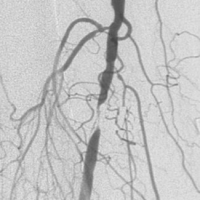
This review shows that anticoagulation in PAD is not a simple “more is better” story: low-dose rivaroxaban plus aspirin delivers the clearest reduction in limb and cardiovascular events, but the benefit is tightly linked to patient selection and bleeding risk. The full read is worth it because it maps exactly where dual pathway inhibition is strongest, where full-dose or nonspecific anticoagulation may backfire, and how PAD changes the antithrombotic strategy in real-world settings like revascularization, VTE overlap, and atrial fibrillation.
Abstract: The aim of this paper is to synthesize current evidence regarding the efficacy, safety, and clinical implementation of anticoagulation in patients with PAD, evaluating the impact of different regimens on limb patency, cardiovascular mortality, and bleeding complications across various clinical settings. The review utilises 110 original studies with 2351292 total participants (topic deduplicated ΣN). The evidence map identifies low-dose rivaroxaban plus aspirin as the most consistent anticoagulation-related signal in PAD, with reported reductions of 24% in MACE and 43% to 47% in MALE, alongside a major bleeding increase with hazard ratios around 1.70 to 1.78. This pattern was most persuasive in symptomatic and post-revascularization PAD, where intensified therapy also appeared to reduce total thrombotic events and venous thromboembolism, supporting a practical role for dual pathway inhibition in carefully selected patients. At the same time, the broader evidence base indicates that full-dose or nonspecific anticoagulation strategies do not uniformly translate across PAD contexts, particularly after some endovascular procedures or in younger revascularized cohorts, where harm signals and treatment heterogeneity remain important concerns. In PAD patients with concomitant atrial fibrillation, the mapped literature also supports maintaining indicated oral anticoagulation and suggests DOAC-based strategies may be preferable to warfarin for overall vascular outcomes. Overall, the review supports a selective, risk-stratified approach that balances limb and cardiovascular protection against bleeding risk rather than a uniform escalation of anticoagulation in all PAD patients. Future research should prioritize indication-specific randomized and prospective comparative studies to define optimal regimens for post-intervention PAD, PAD-VTE overlap, and AF-PAD populations, while improving bleeding-risk stratification and real-world implementation.
Keywords: Peripheral artery disease; Anticoagulation therapy; Rivaroxaban; Major adverse limb events; Lower extremity revascularization; Dual pathway inhibition; Major bleeding risk; Venous thromboembolism; Atrial fibrillation; Ankle-brachial index
Review Stats
Final search date and database lock: 2026-04-03 23:33:25 CEST
Plan: Pro (expanded craft tokens; source: PubMed)
Source: PubMed
Total Abstracts/Papers: 386
Downloaded Abstracts/Papers: 386
Included original and non-original Abstracts/Papers (all): 149
Included original Abstracts/Papers (Vote counting by direction of effect): 110
Reference Index (links used in paper): 70
Total participants (topic deduplicated ΣN): 2351292
Get access to the full paper
Unlock the full evidence map
The full evidence review, including the Introduction, Methods, Results, Discussion, Conclusion, figures, and complete reference index, opens after purchase or sign-in.
The Evidence Object JSON is a separate machine-readable evidence product: a concentrated synthesis of results, topic-level evidence, and discussion across original and non-original studies. It can be directly input into your LLM, agent, or RAG workflow.
[2] Rivaroxaban and Aspirin in Patients With Symptomatic Lower Extremity Peripheral Artery Disease: A Subanalysis of the COMPASS Randomized Clinical Trial. — https://doi.org/10.1001/jamacardio.2020.4390
[4] Peripheral artery disease, antithrombotic treatment and outcomes in European and Asian patients with atrial fibrillation: analysis from two prospective observational registries. — https://doi.org/10.1186/s12916-024-03792-3
[7] Direct Oral Anticoagulants as the First Choice of Anticoagulation for Patients with Peripheral Artery Disease to Prevent Adverse Vascular Events: A Systematic Review and Meta-Analysis. — https://doi.org/10.3390/jcdd10020065
[8] Efficacy and safety of non-vitamin K antagonist oral anticoagulants combined with antiplatelet drugs for patients with peripheral artery disease: A systematic review and meta-analysis of randomized controlled trials. — https://doi.org/10.1177/17085381211003694
[11] Long-Term Treatment with the Combination of Rivaroxaban and Aspirin in Patients with Chronic Coronary or Peripheral Artery Disease: Outcomes During the Open Label Extension of the COMPASS trial. — https://doi.org/10.1093/ehjcvp/pvac023
[21] Reducing residual thrombotic risk in patients with peripheral artery disease: impact of the COMPASS trial. — https://doi.org/10.7573/dic.2020-5-5
[22] Effectiveness and Safety of Anticoagulants in Adults with Non-valvular Atrial Fibrillation and Concomitant Coronary/Peripheral Artery Disease. — https://doi.org/10.1016/j.amjmed.2018.05.007
[26] The incidence and significance of delayed bleeding events after lower extremity revascularization in patients with advanced peripheral arterial disease. — https://doi.org/10.1016/j.jvs.2025.03.394
[32] How can the results of the COMPASS trial benefit patients with coronary or peripheral artery disease in Poland? — https://doi.org/10.33963/kp.14855
[35] Meta-Analysis of Anticoagulation Therapy for the Prevention of Cardiovascular Events in Patients With Peripheral Arterial Disease. — https://doi.org/10.1016/j.amjcard.2021.02.033
[43] Single Center Outcomes of Percutaneous Deep Vein Arterialization in Patients with End-Stage Peripheral Artery Disease. — https://doi.org/10.1177/15385744231226047
[48] Antithrombotic therapy and major adverse limb events in patients with chronic lower extremity arterial disease: systematic review and meta-analysis from the European Society of Cardiology Working Group on Cardiovascular Pharmacotherapy in Collaboration with the European Society of Cardiology Working Group on Aorta and Peripheral Vascular Diseases. — https://doi.org/10.1093/ehjcvp/pvz036
[53] Safety and efficacy of antiplatelet/anticoagulation regimens after Viabahn stent graft treatment for femoropopliteal occlusive disease. — https://doi.org/10.1016/j.jvs.2014.12.062
[54] Current Antithrombotic Prescribing Habits for Extended Secondary Prevention in Patients with Peripheral Artery Disease and Unprovoked Venous Thromboembolism: A Survey Among Specialists in Angiology and Vascular Surgery. — https://doi.org/10.3390/jcm14145157
[56] Prevention of arterial and venous thrombotic events in symptomatic peripheral arterial disease patients after lower extremity revascularization in the VOYAGER PAD trial: Dual anticoagulant/antiplatelet regimen vs antiplatelet therapy alone. — https://doi.org/10.1111/jth.15673
[57] Cardiovascular consequences of discontinuing low-dose rivaroxaban in people with chronic coronary or peripheral artery disease. — https://doi.org/10.1136/heartjnl-2020-318758
[58] Role of Combination Antiplatelet and Anticoagulation Therapy in Diabetes Mellitus and Cardiovascular Disease: Insights From the COMPASS Trial. — https://doi.org/10.1161/circulationaha.120.046448
[63] Comparing the Impact of DOACs and Warfarin on Below-the-Knee Autologous Vein Bypass Patency in Peripheral Artery Disease: A Retrospective Cohort Study with 2-Year Follow-Up. — https://doi.org/10.3390/jpm15070292
[64] Bleeding and thrombotic outcomes associated with postoperative use of direct oral anticoagulants after open peripheral artery bypass procedures. — https://doi.org/10.1016/j.jvs.2020.02.021
[66] Treatment of atrial fibrillation with concomitant coronary or peripheral artery disease: Results from the outcomes registry for better informed treatment of atrial fibrillation II. — https://doi.org/10.1016/j.ahj.2019.04.007
[67] Eligibility and Implementation of Rivaroxaban for Secondary Prevention of Atherothrombosis in Clinical Practice-Insights From the CANHEART Study. — https://doi.org/10.1161/jaha.122.026553
[78] The Cost-Effectiveness of Rivaroxaban Plus Aspirin Compared with Aspirin Alone in the COMPASS Trial: A US Perspective. — https://doi.org/10.1007/s40256-023-00620-6
[86] Heparin and protamine use in peripheral vascular surgery: a comparison between surgeons of the Society for Vascular Surgery and the European Society for Vascular Surgery. — https://doi.org/10.1016/s0950-821x(05)80459-1
[88] Use of paclitaxel-coated balloons in clinical setting is not associated with increased mortality compared with plain balloon angioplasty in femoropopliteal lesions. — https://doi.org/10.1016/j.jvs.2022.06.002
[96] Guideline-directed medical therapies for comorbidities among patients with atrial fibrillation: results from GARFIELD-AF. — https://doi.org/10.1093/ehjopen/oead051
[101] Effectiveness and safety of rivaroxaban and warfarin for prevention of major adverse cardiovascular or limb events in patients with non-valvular atrial fibrillation and type 2 diabetes. — https://doi.org/10.1111/dom.13787
[102] Impact of vascular disease in predicting stroke and death in patients with atrial fibrillation: the Danish Diet, Cancer and Health cohort study. — https://doi.org/10.1111/j.1538-7836.2011.04308.x
[127] Risk stratification of cardiovascular complications using CHADS-VASc and CHADS scores in chronic atherosclerotic cardiovascular disease. — https://doi.org/10.1016/j.ijcard.2021.04.067
[132] Optimal Antithrombotic Regimens Across Atherosclerotic Vascular Beds: Toward Mechanism and Risk-Oriented Strategies. — https://doi.org/10.3390/jcm15062325
[135] Safety of bivalirudin versus unfractionated heparin in endovascular revascularization of peripheral arteries in short- and long-term follow-up. — https://doi.org/10.5114/aic.2019.81757
[138] A prospective randomized controlled clinical trial on clopidogrel combined with warfarin versus clopidogrel alone in the prevention of restenosis after endovascular treatment of the femoropopliteal artery. — https://doi.org/10.1016/j.avsg.2012.07.011
[141] Potential Reduction in Adverse Events and Cost with Novel Anticoagulants among Patients with Acute Limb Ischemia. — https://doi.org/10.1155/2022/3786815