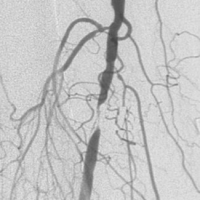
This paper shows that PAD does not affect women and men in the same way: women are often treated less aggressively and face more perioperative complications, while men more often carry the burden of amputation, mortality, and severe limb outcomes. The full paper is worth reading because it makes clear where the true gender gap lies in PAD—not just in prevalence, but in diagnosis, treatment, and what happens after intervention.
Abstract: This paper aims to synthesize current evidence regarding the association between gender and peripheral artery disease (PAD), specifically evaluating differences in prevalence, risk factor profiles, clinical management, procedural outcomes, and limb-related complications across diverse patient populations. The review utilises 209 original studies with 3925814 total participants (ΣN). The evidence suggests a consistent gender-based treatment and outcomes gap: women are less likely to receive guideline-directed pharmacotherapy and vascular specialist care, and often experience higher perioperative morbidity, bleeding, stroke, and repeat revascularization, whereas men more often show greater hospitalized burden, PAD-related mortality, and amputation risk in PAD/diabetes cohorts. Findings on prevalence remain context-dependent, with some screening studies indicating higher ABI-defined PAD prevalence in women despite higher absolute burden in men. These findings support gender-tailored case-finding, risk-factor management, and perioperative counseling, while highlighting the need for more consistent sex-stratified reporting in vascular research.
Keywords: Peripheral Artery Disease; Gender Differences; Ankle Brachial Index; Cardiovascular Risk Factors; Revascularization Outcomes; Medical Treatment Disparities; Mortality and Morbidity; Health-Related Quality of Life; Sexual Dimorphism; Clinical Presentation
Review Stats
Final search date and database lock: 2026-03-28 10:57:07 CET
Plan: Pro (expanded craft tokens; source: Semantic Scholar)
Source: Semantic Scholar
Total Abstracts/Papers: 1825
Downloaded Abstracts/Papers: 1000
Included original and non-original Abstracts/Papers (all): 228
Included original Abstracts/Papers (Vote counting by direction of effect): 209
Reference Index (links used in paper): 67
Total participants (topic deduplicated ΣN): 3925814
Get access to the full paper
Unlock the full evidence map
The full evidence review, including the Introduction, Methods, Results, Discussion, Conclusion, figures, and complete reference index, opens after purchase or sign-in.
The Evidence Object JSON is a separate machine-readable evidence product: a concentrated synthesis of results, topic-level evidence, and discussion across original and non-original studies. It can be directly input into your LLM, agent, or RAG workflow.
[5] Foot Temperature by Infrared Thermography in Patients with Peripheral Artery Disease before and after Structured Home-Based Exercise: A Gender-Based Observational Study — https://doi.org/10.3390/jpm13091312
[8] A Systematic Review and Meta-analysis of Gender Differences in Long-term Mortality and Cardiovascular Events in Peripheral Artery Disease. — https://doi.org/10.1016/j.jvs.2020.09.039
[12] Burden of Peripheral Artery Disease and Its Attributable Risk Factors in 204 Countries and Territories From 1990 to 2019 — https://doi.org/10.3389/fcvm.2022.868370
[13] Atherosclerotic Peripheral Artery Disease in the United States: Gender and Ethnic Variation in a Multiple Cause-of-Death Analysis — https://doi.org/10.1177/1538574420928158
[16] Abstract P211: Burden and Temporal Trend of Peripheral Artery Disease in the United States and Its Attributable Risk Factors From 1990-2019: An Insights From the Global Burden of Disease Study 2019 — https://doi.org/10.1161/circ.149.suppl_1.p211
[22] Exploring Understanding of Peripheral Artery Disease among Patients at High-Risk in Saudi Arabia: Results from an Interview-Based Study — https://doi.org/10.3390/clinpract14010002
[31] Outcomes of open and endovascular infra-inguinal revascularization are poor in young patients with atherosclerotic peripheral artery disease but do not differ between genders — https://doi.org/10.1177/17085381221140160
[34] National and subnational estimation of the prevalence of peripheral artery disease (PAD) in China: a systematic review and meta-analysis — https://doi.org/10.7189/jogh.09.010601
[48] A systematic review and meta-analysis of sex- and gender-based differences in presentation severity and outcomes in adults undergoing major vascular surgery. — https://doi.org/10.1016/j.jvs.2022.02.030
[52] "SHE" is at Risk: Analysis of Clinical Profiles, Interventions and Outcomes of Peripheral Arterial Disease in Women over a Period of 15 Years from India — https://doi.org/10.26502/fjwhd.2644-28840056
[53] Gender Differences in the Outcomes of Drug-Coated Balloon Treatment in Symptomatic Femoropopliteal Arterial Disease — https://doi.org/10.1177/1538574420911508
[56] Prevalence of peripheral arterial disease among diabetic patients in Santo Domingo, Dominican Republic and associated risk factors — https://doi.org/10.5114/amsad.2018.73527
[62] Population Based Analysis of Gender Disparities in 23,715 Percutaneous Endovascular Revascularisations in the Metropolitan Area of Hamburg. — https://doi.org/10.1016/j.ejvs.2018.10.021
[79] Low density lipoprotein cholesterol control status among Canadians at risk for cardiovascular disease: findings from the Canadian Primary Care Sentinel Surveillance Network Database — https://doi.org/10.1186/s12944-015-0056-8
[80] Proatherogenic Oxidized Low-Density Lipoprotein/β2-Glycoprotein I Complexes in Arterial and Venous Disease — https://doi.org/10.1155/2014/234316
[107] Exploring the Relationship Between SVS WIfI and IWGDF Scoring Systems and Reamputation Risk in Patients With Diabetic Foot and Peripheral Artery Disease. — https://doi.org/10.1177/15347346251333835
[110] The global burden of peripheral artery disease attributable to high fasting plasma glucose: a comprehensive analysis from 1990 to 2021 and projections to 2036 — https://doi.org/10.1097/cp9.0000000000000144
[111] LOX-1 rs1050283 TT genotype is associated with the severity of peripheral artery disease: a cross-sectional study in Mataram, Indonesia — https://doi.org/10.15562/bmj.v12i2.4221
[112] Prevalence of peripheral artery disease and risk factors in the elderly: A community based cross-sectional study from northern Kerala, India — https://doi.org/10.1016/j.ihj.2017.11.001
[116] Don’t stop walking: the in-home rehabilitation program for peripheral artery disease patients during the COVID-19 pandemic — https://doi.org/10.1007/s11739-020-02598-4
[119] Ideal Cardiovascular Health Metrics on the New Occurrence of Peripheral Artery Disease: A Prospective Cohort Study in Northern China — https://doi.org/10.1038/s41598-020-66578-6
[120] Risk Factors for Asymptomatic Peripheral Artery Disease in Type II Diabetes Mellitus Patients, a Cross-Sectional Study at Tertiary care Hospital — https://doi.org/10.9734/jammr/2020/v32i2330727
[122] A New Preprocedural Score to Predict Bleeding Complications of Endovascular Interventions for Peripheral Artery Disease — https://doi.org/10.1177/1526602819866191
[125] Influence of micro- and macro-vascular disease and Tumor Necrosis Factor Receptor 1 on the level of lower-extremity amputation in patients with type 2 diabetes — https://doi.org/10.1186/s12933-018-0725-9
[127] Preoperative Factors Associated with Target Lesion Revascularization following Endovascular Therapy of the Superficial Femoral Artery — https://doi.org/10.3390/jcm11154606
[133] The epidemiology and burden of atherosclerotic cardiovascular disease in China from 1990 to 2021: findings from the global burden of disease 2021 — https://doi.org/10.3389/fpubh.2025.1529506
[137] Peripheral Arterial Disease Prevalence in a Population-Based Sample of People with Diabetes on the Caribbean Island of Barbados — https://doi.org/10.2147/vhrm.s364993
[138] Invasively-treated incidence of lower extremity peripheral arterial disease and associated factors in Taiwan: 2000–2011 nationwide hospitalized data analysis — https://doi.org/10.1186/1471-2458-13-1107
[151] Differences in brain natriuretic peptide and other factors between Japanese peripheral arterial disease patients with critical limb ischemia and intermittent claudication. — https://doi.org/10.5551/jat.18929
[187] Assessment of longitudinal distribution of subclinical atherosclerosis in femoral arteries by three-dimensional cardiovascular magnetic resonance vessel wall imaging — https://doi.org/10.1186/s12968-018-0482-7
[188] The Real-World CONSEQUENT ALL COMERS Study: Predictors for Target Lesion Revascularization and Mortality in an Unselected Patient Population — https://doi.org/10.1177/0003319721997314