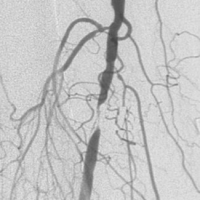
PAD is not just blocked arteries — this review shows it as a biologically complex disease driven by endothelial failure, oxidative stress, metabolic myopathy, mitochondrial dysfunction, and emerging signals from gut metabolites, extracellular vesicles, and non-coding RNA pathways. The full read is worth it because it maps where the strongest mechanistic evidence lies, which biomarkers may matter next, and which pathophysiologic signals could reshape future PAD diagnostics and targeted therapy.
Additional notes
During editorial revision, the original CARMN study was added (e1) to directly support the future-directions statement.
References [5], [86], [142], [150], and [178] correspond to conference abstracts; no full peer-reviewed article was identified at the time of review.
Abstract: This paper aims to synthesize current research on the pathophysiology of peripheral artery disease, identifying key biological mechanisms, molecular markers, and contributing factors to provide a comprehensive overview of the disease's underlying processes. Drawing on 62 references, this scoping review maps the current evidence on peripheral artery disease pathophysiology, highlighting its complex and multifactorial nature. A central finding across the evidence base is the pervasive role of endothelial dysfunction, driven by chronic inflammation, oxidative stress, and metabolic dysregulation, which collectively impair angiogenesis and lead to localized tissue damage. The synthesis further indicates critical involvement of mitochondrial dysfunction, genetic and environmental interactions, gut-derived metabolites, and specific molecular pathways like non-coding RNAs and extracellular vesicle signaling in disease progression. While this review provides a broad overview of the evidence landscape, the qualitative nature of its synthesis means that further rigorous studies are needed to establish causal links and validate novel biomarkers. Ultimately, understanding these diverse pathophysiological facets is crucial for developing more effective diagnostic tools and targeted therapeutic strategies for PAD patients.
.
Final search date and database lock: 2026-03-09 15:12:06 CET
Plan: Pro (expanded craft tokens; source: Semantic Scholar)
Source: Semantic Scholar
Total Abstracts/Papers: 1059
Downloaded Abstracts/Papers: 1000
Included original and non-original Abstracts/Papers (all): 189
Included original Abstracts/Papers (OSMA vote counting by direction of effect): 100
Reference Index (links used in paper): 62
Total participants (topic deduplicated ΣN): 1005011
Get access to the full paper
Unlock the full evidence map
The full evidence review, including the Introduction, Methods, Results, Discussion, Conclusion, figures, and complete reference index, opens after purchase or sign-in.
The Evidence Object JSON is a separate machine-readable evidence product: a concentrated synthesis of results, topic-level evidence, and discussion across original and non-original studies. It can be directly input into your LLM, agent, or RAG workflow.
Reference Index (62)
[2] Circulating Soluble EPCR Levels Are Reduced in Patients with Ischemic Peripheral Artery Disease and Associated with Markers of Endothelial and Vascular Function — https://doi.org/10.3390/biomedicines11092459
[7] Genome- and transcriptome-wide association meta-analysis reveals new insights into genes affecting coronary and peripheral artery disease — https://doi.org/10.1371/journal.pone.0335513
[10] Gender differences in the association between the triglyceride-glucose index and peripheral artery disease in vascular surgery inpatients aged 50 and above: a retrospective cross-sectional study — https://doi.org/10.3389/fendo.2025.1578025
[16] Prevalence of Peripheral Arterial Disease in Patients With Coronary Artery Disease After Cardiac Catheterization: A Prospective Observational Study — https://doi.org/10.1016/j.amjcard.2023.11.028
[32] Clinical management of peripheral arterial disease in chronic kidney disease—a comprehensive review from the European Renal Association CKD-MBD Working Group — https://doi.org/10.1093/ckj/sfaf089
[33] The impact of the gut microbiome on the development of atherosclerosis and peripheral arterial disease: A narrative review — https://doi.org/10.32394/pe/214773
[61] Cardiovascular events in chronic kidney disease (CKD)—an importance of vascular calcification and microcirculatory impairment — https://doi.org/10.1186/s41100-016-0062-y
[65] Activation of Nrf2 signaling: A key molecular mechanism of protection against cardiovascular diseases by natural products — https://doi.org/10.3389/fphar.2022.1057918
[69] The role of rivaroxaban for patients with atherosclerotic vascular disease in the modern era — https://doi.org/10.1002/ccd.29089
[87] Haploinsufficiency of Transferrin Receptor 1 Impairs Angiogenesis with Reduced Mitochondrial Complex I in Mice with Limb Ischemia — https://doi.org/10.1038/s41598-019-49983-4
[95] Current Opinion: Mean Platelet Volume Is One of the Most Important Parameters at the First Glance — https://doi.org/10.1159/000354738
[96] Crossroads between peripheral atherosclerosis, western-type diet and skeletal muscle pathophysiology: emphasis on apolipoprotein E deficiency and peripheral arterial disease — https://doi.org/10.1186/s12929-017-0346-8
[99] Lower-Limb Peripheral Arterial Disease and Amputations in people with Diabetes: Risk Factors, Prognostic Value and management. — https://doi.org/10.1016/j.lpm.2023.104164
[106] Oxidative stress and vascular dysfunction: Potential therapeutic targets and therapies in peripheral artery disease. — https://doi.org/10.1016/j.mvr.2024.104713
[107] Lipoprotein particle profile in the presence of peripheral artery disease among patients with coronary heart disease: Data from the CORDIOPREV study. — https://doi.org/10.1016/j.jacl.2024.12.007
[127] Evolving concepts in the pathophysiology of atherosclerosis: from endothelial dysfunction to thrombus formation through multiple shades of inflammation — https://doi.org/10.2459/jcm.0000000000001450
[131] Genetic Variants in the Bone Morphogenic Protein Gene Family Modify the Association between Residential Exposure to Traffic and Peripheral Arterial Disease — https://doi.org/10.1371/journal.pone.0152670
[141] The Association of Chronic Kidney Disease with Increased Cardiovascular Morbidity and Mortality: A Systematic Review — https://doi.org/10.70070/edv76569
[149] Gene expression profiling of peripheral blood mononuclear cells in the setting of peripheral arterial disease — https://doi.org/10.1186/2043-9113-2-6
[184] Antiphospholipid antibodies in patient with acute lower member ischemia and pulmonary thromboembolism as a result of infection by SARS-CoV2 — https://doi.org/10.1007/s10067-020-05194-1
[e1] A smooth muscle cell lncRNA controls angiogenesis in chronic limb-threatening ischemia through miR-143-3p/HHIP signaling — https://doi.org/10.1172/jci188559