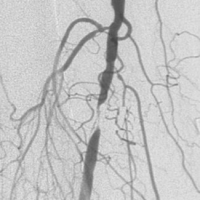
WIfI combines true biological risk signals such as ischemia with limb-level consequences such as wound burden and infection to answer the central clinical question in PAD: is limb salvage still realistically achievable? This evidence map shows how WIfI stage translates into real-world amputation risk across clinical scenarios, and where its predictive value becomes strongest in modern decision-making.
Human-verified editorial review
Verified by World ID proof-of-human. This editorial layer was submitted from a SAIMSARA account verified as a unique human.
Abstract: The aim of this review is to synthesize contemporary evidence regarding the prognostic utility, clinical integration, and predictive accuracy of the Wound, Ischemia, and foot Infection (WIfI) classification system in patients with peripheral artery disease (PAD) and chronic limb-threatening ischemia (CLTI) across diverse clinical settings and populations. The review utilises 90 original studies with 1187547 total participants (topic deduplicated ΣN). This evidence map suggests that the WIfI classification has a consistent role in PAD and CLTI risk stratification, with one-year major amputation increasing from 15% in stage 1 to 55% in stage 4 in a large real-world cohort. Across the mapped literature, higher stages were also associated with worse survival, poorer wound healing, and less favorable post-revascularization trajectories, while stage 3 or 4 disease showed particularly strong signals for cardiac and limb-related risk. The review further supports a practical role for combining WIfI with anatomic frameworks such as Global Limb Anatomic Staging System (GLASS) and, when needed, adjunctive ischemia measures such as transmetatarsal pressure to refine decision-making in complex limb salvage care. At the same time, the evidence base indicates important heterogeneity, including settings in which prognostic discrimination was limited, especially in some conservatively managed or tissue-loss cohorts. Clinically, these findings support more routine and structured use of WIfI staging to guide multidisciplinary planning, surveillance intensity, and revascularization discussions. Future research should prioritize prospective, standardized studies that test how best to integrate WIfI with anatomic staging, alternative perfusion metrics, and key comorbidity profiles to improve prediction across diverse PAD populations.
Final search date and database lock: 2026-04-11 13:27:01 CEST
Plan: Pro (expanded craft tokens; source: Semantic Scholar)
Source: Semantic Scholar
Total Abstracts/Papers: 1562
Downloaded Abstracts/Papers: 1000
Included original and non-original Abstracts/Papers (all): 107
Included original Abstracts/Papers (Vote counting by direction of effect): 90
Reference Index (links used in paper): 41
Total participants (topic deduplicated ΣN): 1187547
Get access to the full paper
Unlock the full evidence map
The full evidence review, including the Introduction, Methods, Results, Discussion, Conclusion, figures, and complete reference index, opens after purchase or sign-in.
The Evidence Object JSON is a separate machine-readable evidence product: a concentrated synthesis of results, topic-level evidence, and discussion across original and non-original studies. It can be directly input into your LLM, agent, or RAG workflow.
Reference Index (41)
[2] Prognostic value of Wound, Ischemia and foot Infection (WIfI) score after lower extremities bypass surgery for peripheral artery disease in chronic hemodialysis patients — https://doi.org/10.1093/eurheartj/ehad655.2074
[3] The Society for Vascular Surgery Wound, Ischemia, and foot Infection (WIfI) classification system predicts wound healing better than direct angiosome perfusion in diabetic foot wounds. — https://doi.org/10.1016/j.jvs.2018.01.060
[5] The CHADS2 score may be a useful predictor of prognosis in chronic limb-threatening ischemia patients after endovascular intervention with and without AF — https://doi.org/10.1093/eurheartj/ehad655.2054
[6] Multidisciplinary approach achieves limb salvage without revascularization in patients with mild to moderate ischemia and tissue loss. — https://doi.org/10.1016/j.jvs.2019.07.103
[7] Association of cardiac prognosis in chronic limb-threatening ischemia patients after endovascular intervention and wound, ischemia, and foot infection clinical stage — https://doi.org/10.1093/eurheartj/ehac544.1962
[8] Exploring the Relationship Between SVS WIfI and IWGDF Scoring Systems and Reamputation Risk in Patients With Diabetic Foot and Peripheral Artery Disease. — https://doi.org/10.1177/15347346251333835
[9] Examination of patients with diabetes mellitus and peripheral arterial disease according to the adapted ischaemic criteria of the WIfI classification — https://doi.org/10.26779/2786-832x.2024.1.16
[10] Artificial Intelligence Techniques for Prognostic and Diagnostic Assessments in Peripheral Artery Disease: A Scoping Review — https://doi.org/10.1177/00033197241310572
[13] A scoping review of electronic phenotyping methodologies used to identify peripheral artery disease in observational studies — https://doi.org/10.1177/1358863x251328671
[19] Imaging Characterisation of Peripheral Artery Disease: A Scoping Review on Current Classifications and New Insights Brought by Artificial Intelligence — https://doi.org/10.1016/j.ejvsvf.2025.06.003
[37] Abstract 9928: Risk Stratification for Amputation in Patients With Symptomatic Peripheral Artery Disease After Lower Extremity Revascularization: Insights From VOYAGER PAD — https://doi.org/10.1161/circ.146.suppl_1.9928
[41] Amputation-Free Survival, WIfI Stage, and GLASS Classifications in Distal Crural or Pedal Bypass for Chronic Limb-Threatening Ischemia — https://doi.org/10.3390/jcm13226649
[42] The Society for Vascular Surgery Wound, Ischemia, and foot Infection (WIfI) classification independently predicts wound healing in diabetic foot ulcers — https://doi.org/10.1016/j.jvs.2017.12.079
[43] How to Select for Angioplasty or Surgical Bypass in People With Diabetes and Peripheral Arterial Disease. — https://doi.org/10.31083/bjhm50657
[47] Association between critical limb ischemia, the Society for Vascular Surgery Wound, Ischemia and foot Infection (WIfI) classification system and arterial stiffness. — https://doi.org/10.1016/j.avsg.2019.07.017
[57] Podcast on How to Classify Foot Ulcers in People with Diabetes (2023 Update of the IWGDF Guidelines on Classification). — https://doi.org/10.1007/s13300-023-01521-2
[60] Clinical Outcomes of Infrapopliteal Angioplasty in Chronic Limb-threatening Ischemia: A Global Limb Anatomic Staging System Staging Perspective — https://doi.org/10.4103/ijves.ijves_118_25
[61] Evolving Paradigms in Chronic Limb-threatening Ischemia: A Systematic Review of Current and Emerging Diagnostic and Therapeutic Approaches — https://doi.org/10.1055/a-2798-9516
[64] Outcomes of severe limb ischemia with tissue loss and impact of revascularization in haemodialysis patients with wound, ischemia, and foot infection (WIfI) stage 3 or 4. — https://doi.org/10.1024/0301-1526/a000819
[65] Validation of transmetatarsal pressure as an alternative for evaluating severity of chronic limb-threatening ischemia — https://doi.org/10.1177/1358863x251346133
[70] Infrapopliteal 3-Vessel Occlusive Disease Is the Only Predictor of Wound Recurrence After Complete Wound Healing via Endovascular Therapy in Patients With Chronic Limb-threatening Ischemia — https://doi.org/10.1177/15266028231197983
[71] Abstract 4147018: Predictors of Clinically Meaningful 1-Year Health Status Improvements Following Endovascular or Surgical Revascularization: Insights from the BEST-CLI Trial — https://doi.org/10.1161/circ.150.suppl_1.4147018
[75] Abstract 13060: Nutritional Status is Associated With Cardiac Death in Patients With Chronic Limb-Threatening Ischemia Undergoing Endovascular Intervention — https://doi.org/10.1161/circ.148.suppl_1.13060
[79] The Global Limb Anatomic Staging System (GLASS) is associated with outcomes of infrainguinal revascularization in chronic limb threatening ischemia. — https://doi.org/10.1016/j.jvs.2020.12.094
[87] The impact of angiographic pedal circulation status on wound healing in chronic limb-threatening ischemia after bypass surgery. — https://doi.org/10.1016/j.jvs.2024.08.023
[95] The Infrapopliteal Global Limb Anatomic Staging System Predicts Wound Healing and Pain Relief After Partial Revascularization. — https://doi.org/10.1016/j.avsg.2022.07.015
[96] Open revascularization approach is associated with healing and ambulation following transmetatarsal amputation in patients with chronic limb threatening ischemia. — https://doi.org/10.1016/j.jvs.2022.12.035
[97] Standards for the development and methodology of the 2019 International Working Group on the Diabetic Foot guidelines — https://doi.org/10.1002/dmrr.3267
[104] Risk factor management over two decades in hospitalised patients with chronic limb-threatening ischaemia with and without diabetes mellitus — https://doi.org/10.1177/20420188251362729
[106] Aktualität der grundlegenden und determinierenden Bedeutung der chronisch-kritischen Extremitätenischämie sowie ihrer sich reetablierenden Behandlung mittels kruraler/pedaler Bypässe in Deutschland und in Sachsen-Anhalt — https://doi.org/10.1007/s00104-023-01933-7