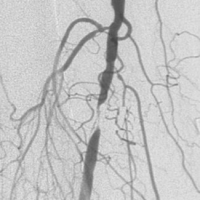
Popliteal artery aneurysm is rare in the general population, but the signal changes sharply in AAA/SAA cohorts, where targeted screening may reveal clinically important bilateral and systemic aneurysmal disease. The full SAIMSARA evidence map gives humans and AI agents a structured, reference-linked view of prevalence, sex-specific presentation, co-prevalence, and emerging biological risk signals.
Human-verified editorial review
Verified by World ID proof-of-human. This editorial layer was submitted from a SAIMSARA account verified as a unique human.
Abstract: The aim of this paper is to synthesize current research regarding the prevalence of popliteal artery aneurysms in the general population and high-risk cohorts, while exploring sex-specific differences in presentation, aneurysmal co-prevalence, and biological/genetic signals. The review utilises 12 references representing 13 original studies, with 27,463 total participants (topic-deduplicated ΣN). The mapped evidence indicates that PAA prevalence is highly population-dependent, ranging from <0.5% in the general population and ~1% in those aged 65–80 years to 14.2–19% among men with AAA or subaneurysmal aortic dilatation, with roughly one in four PAA patients harboring an additional aneurysm and contralateral PAA reaching 45.5%. Sex-specific signals were prominent, as women comprised only ~4.8–4.9% of treated cases yet presented symptomatically more often (65.5% vs. 49.4%) and at smaller mean diameters (22.5 mm vs. 27 mm), highlighting a potentially under-recognized subgroup. Emerging biological signals, including ApoE involvement and the MMP12 rs652438 C allele association (OR 2.8), suggest mechanistic avenues that remain exploratory within this evidence map. Clinically, these findings reinforce the value of targeted PAA screening in patients with AAA and careful attention to small or symptomatic aneurysms regardless of diameter. Future research should prioritize prospective, sex-stratified cohorts that integrate genetic markers and longer-term endovascular durability data to clarify thresholds for intervention and refine risk-based screening strategies.
Final search date and database lock: 2026-05-02 20:40:52 CEST
Plan: Pro (expanded craft tokens; source: PubMed)
Source: PubMed
Total Abstracts/Papers: 29
Downloaded Abstracts/Papers: 29
Included original and non-original Abstracts/Papers (all): 15
Included original Abstracts/Papers (Vote counting by direction of effect): 13
Reference Index (links used in paper): 12
Total participants (topic deduplicated ΣN): 27463
Get access to the full paper
Unlock the full evidence map
The full evidence review, including the Introduction, Methods, Results, Discussion, Conclusion, figures, and complete reference index, opens after purchase or sign-in.
The Evidence Object JSON is a separate machine-readable evidence product: a concentrated synthesis of results, topic-level evidence, and discussion across original and non-original studies. It can be directly input into your LLM, agent, or RAG workflow.
[6] Popliteal Aneurysms are Common Among Men With Screening Detected Abdominal Aortic Aneurysms, and Prevalence Correlates With the Diameters of the Common Iliac Arteries. — https://doi.org/10.1016/j.ejvs.2019.07.042
[14] Multiple sites of vascular dilation or aneurysmal disease and matrix metalloproteinase genetic variants in patients with abdominal aortic aneurysm. — https://doi.org/10.1016/j.jvs.2017.09.047