
SAIMSARA Journal

Machine Generated Science • ISSN 3054-3991

Semaglutide: Scoping Review with ☸️SAIMSARA.

Cardiac & Vascular Health icon

Cardiac & Vascular Health

Issue 1, Volume 1, 2026

DOI: 10.62487/saimsara45190890

Editorial note
• Last update: 2026-04-27 08:57:15
What is this paper about
Semaglutide is not just a weight-loss drug — this review maps how it reaches across obesity, diabetes, cardiovascular disease, kidney protection, liver disease, and emerging neurologic pathways, while separating strong evidence from hype. The full paper is worth reading because it shows where semaglutide truly delivers the biggest clinical gains, where the safety and durability limits begin, and which future uses may matter most.
Additional notes
Kidney protection section updated to include the original FLOW trial (e1).
Human-verified editorial review Verified by World ID proof-of-human. This editorial layer was submitted from a SAIMSARA account verified as a unique human.

Evidence preview · Did you know?
Realistic cardiometabolic clinic scene showing a patient with obesity and cardiovascular risk discussing semaglutide treatment with a physician.

Not only a weight-loss drug

Did you know? In overweight or obesity with established cardiovascular disease but no diabetes, semaglutide 2.4 mg reduced major cardiovascular events with HR 0.80.

This turns the story from body weight alone toward measurable cardiovascular-risk reduction.
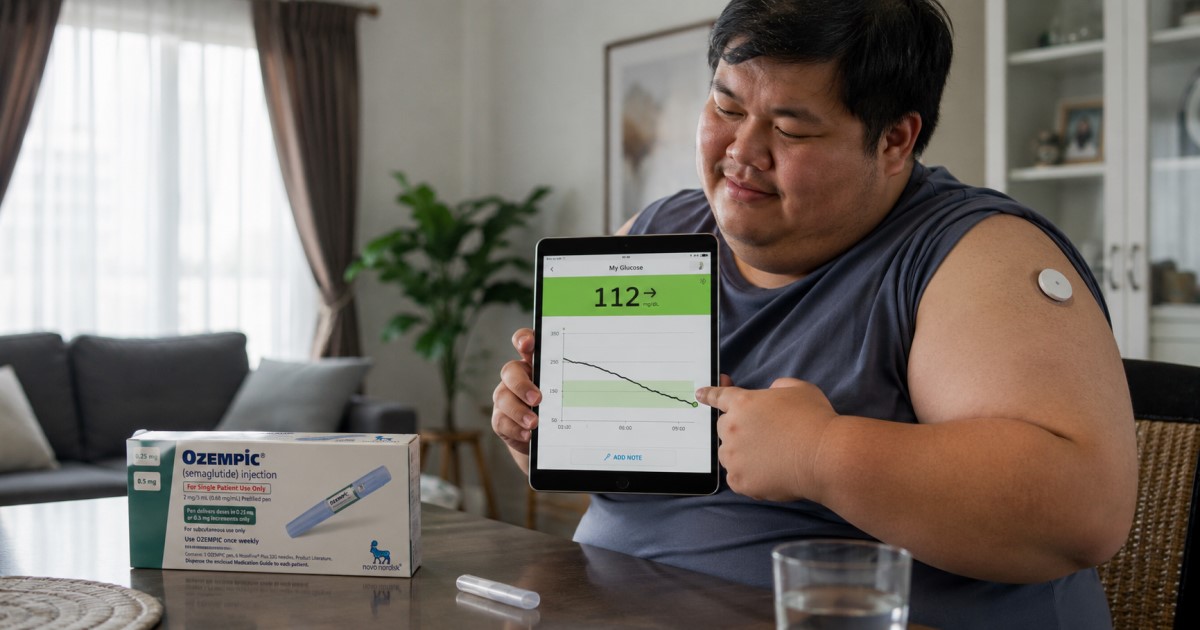
Realistic metabolic medicine scene showing glucose monitoring, weight-loss data, and diabetes-prevention charts.

Prediabetes can move backward

Did you know? In obesity with prediabetes, semaglutide 2.4 mg led to 81% normoglycemia versus 14% with placebo at 52 weeks.

The evidence map shows diabetes-prevention signals, not only BMI reduction.

Realistic anesthesia and endoscopy planning scene highlighting gastric-retention and aspiration-risk assessment before a procedure.

Fasting may not be enough

Did you know? Around procedures, semaglutide was linked to OR 4.29 for full stomach and OR 9.85 for solid gastric contents despite fasting.

This creates a practical safety gap for anesthesia, endoscopy, and perioperative planning.

Swipe sideways on mobile · full evidence map opens after unlock

Abstract: The aim of this paper is to synthesize current evidence regarding the clinical efficacy, safety profile, and multi-systemic impacts of semaglutide across diverse patient populations, including those with T2DM, obesity, chronic kidney disease (CKD), and heart failure. The review utilises 1462 original studies with 15902477 total participants (topic deduplicated ΣN). The mapped evidence indicates that semaglutide has a broad and clinically important role across obesity, type 2 diabetes, cardiovascular disease, kidney disease, and selected emerging indications. The most prominent signal was cardiovascular risk reduction in people with overweight or obesity and established cardiovascular disease without diabetes, where semaglutide 2.4 mg was associated with a hazard ratio of 0.80 for cardiovascular death, nonfatal myocardial infarction, or nonfatal stroke; this sits alongside substantial weight loss signals of about 14.9% to 16.0% in obesity trials and kidney protection with up to a 24% reduction in major kidney disease events in type 2 diabetes with chronic kidney disease. Across the evidence map, benefits were repeatedly linked to improvements in appetite regulation, glycemia, albuminuria, heart failure symptoms, and liver disease markers, supporting a multisystem therapeutic profile rather than a purely glucose-lowering effect. At the same time, the literature consistently highlights practical safety and implementation issues, especially gastrointestinal intolerance, perioperative gastric retention, possible ocular safety signals, and frequent discontinuation with weight regain after withdrawal. Clinically, these findings support semaglutide as a high-value option when treatment goals include combined weight, cardiometabolic, and renal risk reduction, provided that titration, perioperative planning, and adverse-effect monitoring are individualized. Future research should prioritize longer-term, indication-specific comparative studies that clarify durability, safety in higher-risk subgroups, and the mechanisms underlying unresolved ocular, psychiatric, and body-composition concerns.

Keywords: Type 2 diabetes mellitus; Obesity management; GLP-1 receptor agonists; Chronic kidney disease; Cardiovascular outcomes; Body composition; Medication adherence; Quality of life; Pharmacoeconomics; Adverse effects

Review Stats

Get access to the full paper

Unlock the full evidence map

The full evidence review, including the Introduction, Methods, Results, Discussion, Conclusion, figures, and complete reference index, opens after purchase or sign-in. The Evidence Object JSON is a separate machine-readable evidence product: a concentrated synthesis of results, topic-level evidence, and discussion across original and non-original studies. It can be directly input into your LLM, agent, or RAG workflow.

Reference Index (255)