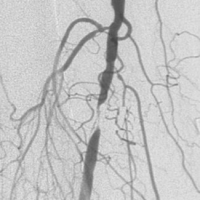
Postoperative complications in vascular surgery are not a single risk — they are a procedure-specific spectrum dominated by cardiac injury, wound/groin infection, renal dysfunction, pulmonary failure, and post-discharge events. This review maps where the danger concentrates and why generic risk calculators are insufficient for modern vascular practice.
Human-verified editorial review
Verified by World ID proof-of-human. This editorial layer was submitted from a SAIMSARA account verified as a unique human.
Abstract: This review aims to synthesize current evidence on the types, frequency, and predictive factors of postoperative complications across various vascular surgical procedures, including carotid, aortic, and peripheral interventions. The review utilises 3387 original studies with 21035487 total participants (topic deduplicated ΣN). The mapped evidence indicates that postoperative complications in vascular surgery are common and highly procedure-dependent, with overall rates spanning roughly 17.6% in mixed cohorts to 35.3% in open abdominal aortic surgery and reaching 87.1% after ruptured open aneurysm repair. Cardiac events emerged as the most consistently reported and prognostically important domain, with myocardial injury after noncardiac surgery affecting up to 24% of patients and perioperative myocardial infarction or injury reported in 18.7% of high-risk arterial vascular cohorts with substantial 1-year mortality. Wound, groin, and infectious complications represented the most frequent local morbidity signal, with groin wound complication rates of 21–23% and a large share of surgical site infections detected only after discharge. Recurrent signals across topics suggest that frailty, malnutrition, anemia, diabetes, and cognitive impairment amplify complication risk, while existing cardiac risk calculators systematically underestimate vascular-specific morbidity, supporting a clinical shift toward procedure-specific risk stratification, biomarker surveillance such as troponin monitoring, and structured post-discharge follow-up. Heterogeneity in complication definitions, retrospective study dominance, and variable surveillance windows constrain certainty within this evidence map. Future research should prioritize prospective, procedure-stratified cohorts with standardized core outcome definitions and validated post-discharge surveillance to better quantify modifiable drivers of cardiac, wound, renal, and pulmonary complications across carotid, aortic, and peripheral vascular interventions.
Final search date and database lock: 2026-04-30 23:24:34 CEST
Plan: Pro (expanded craft tokens; source: PubMed)
Source: PubMed
Total Abstracts/Papers: 17076
Downloaded Abstracts/Papers: 10000
Included original and non-original Abstracts/Papers (all): 3715
Included original Abstracts/Papers (Vote counting by direction of effect): 3387
Reference Index (links used in paper): 130
Total participants (topic deduplicated ΣN): 21035487
Get access to the full paper
Unlock the full evidence map
The full evidence review, including the Introduction, Methods, Results, Discussion, Conclusion, figures, and complete reference index, opens after purchase or sign-in.
The Evidence Object JSON is a separate machine-readable evidence product: a concentrated synthesis of results, topic-level evidence, and discussion across original and non-original studies. It can be directly input into your LLM, agent, or RAG workflow.
[33] Prognostic Impact of Anemia and Blood Transfusions on Cardiovascular Outcomes in Patients Undergoing Vascular Surgery: A Scoping Review. — https://doi.org/10.1053/j.jvca.2024.10.033
[43] Mortality and major postoperative complications within 1 year after vascular surgery: a prospective cohort study. — https://doi.org/10.20452/pamw.16645
[50] Type 2 diabetes mellitus, independent of insulin use, is associated with an increased risk of cardiac complications after vascular surgery. — https://doi.org/10.1177/0310057x1304100515
[72] A systematic review and meta-analysis comparing the effectiveness of negative-pressure wound therapy to standard therapy in the prevention of complications after vascular surgery. — https://doi.org/10.1016/j.ijsu.2020.02.037
[77] Delphi Study to Reach International Consensus Among Vascular Surgeons on Major Arterial Vascular Surgical Complications. — https://doi.org/10.1007/s00268-019-05038-3
[84] Preoperative cognitive performance and its association with postoperative complications in vascular surgery patients: A prospective study. — https://doi.org/10.1016/j.amjsurg.2024.115784
[164] The association of venous thromboembolism chemoprophylaxis timing on venous thromboembolism after major vascular surgery. — https://doi.org/10.1016/j.jvs.2017.06.087
[168] Vascular Surgery Patients at Risk for Malnutrition Are at an Increased Risk of Developing Postoperative Complications. — https://doi.org/10.1016/j.avsg.2019.10.037
[230] Surgical Management of Percutaneous Transfemoral Access to Minimize Vascular Complications Related to Transcatheter Aortic Valve' Implantation. — https://doi.org/10.1177/0003319717711589
[238] A Risk Stratification Model for Cardiovascular Complications during the 3-Month Period after Major Elective Vascular Surgery. — https://doi.org/10.1155/2018/4381527
[263] Using postoperative cardiac Troponin-I (cTi) levels to detect myocardial ischaemia in patients undergoing vascular surgery. — https://doi.org/10.1177/096721090100900308
[322] Secondary Femoral Access Hemostasis During Transcatheter Aortic Valve Replacement: Impact of Vascular Closure Devices. — https://doi.org/10.25270/jic/20.00588
[336] Incidence, prognostic factors and impact of postoperative delirium after major vascular surgery: A meta-analysis and systematic review. — https://doi.org/10.1177/1358863x17721639
[450] Incidence and clinical presentation of bowel ischaemia after aortoiliac surgery--2930 operations from a population-based registry in Sweden. — https://doi.org/10.1016/s1078-5884(96)80098-0
[480] A novel risk assessment tool for postoperative delirium in vascular surgery: The stress model (Siena posTopeRative dElirium in vaScular Surgery). — https://doi.org/10.1177/17085381241236926
[489] Improving the Power of the American Society of Anesthesiology Classification System to Risk Stratify Vascular Surgery Patients Based on National Surgical Quality Improvement Project-Defined Functional Status. — https://doi.org/10.1016/j.avsg.2018.04.005
[492] Comprehensive Evaluation of Common Open and Endovascular Procedures and Their Relationship with Postdischarge Complications. — https://doi.org/10.1016/j.avsg.2022.06.016
[697] The Vascular Study Group of New England Cardiac Risk Index (VSG-CRI) predicts cardiac complications more accurately than the Revised Cardiac Risk Index in vascular surgery patients. — https://doi.org/10.1016/j.jvs.2010.03.031
[835] Acute complications in the post-anaesthesia care unit after infrainguinal surgery for lower limb ischaemia - a prospective observational cohort study. — https://doi.org/10.1024/0301-1526/a000745
[960] The effect of incremental increases in the number of packed red blood cell units transfused on perioperative outcomes in open abdominal aortic aneurysm repair. — https://doi.org/10.1177/17085381241260925
[993] Occurrence, Definition and Risk Factors Related to Groin Wound Complications Following Open Vascular Surgeries. — https://doi.org/10.1111/iwj.70843
[999] Poor glycemic control is a strong predictor of postoperative morbidity and mortality in patients undergoing vascular surgery. — https://doi.org/10.1016/j.jvs.2018.06.212
[1160] Prognostic value of preoperative electrocardiography in predicting myocardial injury after vascular surgery. — https://doi.org/10.33963/kp.a2022.0085
[1186] Mesenteric infarction after aortoiliac surgery on the basis of 1752 operations from the National Vascular Registry. — https://doi.org/10.1007/pl00013190
[1247] Incidence and significance of postoperative complications occurring between discharge and 30 days: a prospective cohort study. — https://doi.org/10.1016/j.jss.2016.06.073
[1584] The Natural History of Peripheral Arterial Disease Following Lower Extremity Revascularization at a Single Institution. — https://doi.org/10.1016/j.avsg.2025.01.047
[1876] A comparison of results of carotid endarterectomy in octogenarians and nonagenarians to younger patients from the Mid-America Vascular Study Group and the Society for Vascular Surgery Vascular Quality Initiative. — https://doi.org/10.1016/j.jvs.2016.12.118
[1884] Risk stratification for the development of respiratory adverse events following vascular surgery using the Society of Vascular Surgery's Vascular Quality Initiative. — https://doi.org/10.1016/j.jvs.2016.07.119
[1912] Anesthesia and perioperative management of patients undergoing transcatheter aortic valve implantation: analysis of 90 consecutive patients with focus on perioperative complications. — https://doi.org/10.1053/j.jvca.2009.12.019
[2094] External validation of the Revised Cardiac Risk Index and National Surgical Quality Improvement Program Myocardial Infarction and Cardiac Arrest calculator in noncardiac vascular surgery. — https://doi.org/10.1016/j.bja.2019.05.029
[2168] Early extubation is associated with reduced length of stay and improved outcomes after elective aortic surgery in the Vascular Quality Initiative. — https://doi.org/10.1016/j.jvs.2016.12.122
[2186] Prospective, randomized, multi-institutional clinical trial of a silver alginate dressing to reduce lower extremity vascular surgery wound complications. — https://doi.org/10.1016/j.jvs.2014.07.034
[2365] Impact of infectious complications after elective surgery on hospital readmission and late deaths in the U.S. Medicare population. — https://doi.org/10.1089/sur.2012.116
[2381] The impact of exposure technique on perioperative complications in patients undergoing elective open abdominal aortic aneurysm repair. — https://doi.org/10.1016/j.jvs.2015.12.025
[2384] Safety and efficacy of the unilateral, suture-based, dry-closure technique in percutaneous trans-axillary aortic valve implantation. — https://doi.org/10.1016/j.carrev.2025.02.006
[2416] Editor's Choice - Norwegian Randomised Trial of Laparoscopic versus Open Aortobifemoral Bypass: The Norwegian Laparoscopic Aortic Surgery Trial (NLAST). — https://doi.org/10.1016/j.ejvs.2025.09.046
[2428] Trends in vascular complications and associated treatment strategies following transfemoral transcatheter aortic valve replacement. — https://doi.org/10.1016/j.jvs.2020.01.050
[2506] Bypass Thrombosis is the Most Common Reason for Unplanned Return to Operating Room After Lower Extremity Bypass for Chronic Limb-Threatening Ischemia. — https://doi.org/10.1177/00031348261429440
[2992] Health Insurance Payor Type as a Predictor of Clinical Presentation and Mortality in Patients Undergoing Urgent or Emergent TEVAR for Type B Aortic Dissection: Insights from Society for Vascular Surgery Vascular Quality Initiative Database. — https://doi.org/10.1016/j.avsg.2026.02.007
[3113] [Delirium increases morbidity and length of stay after vascular surgery operations. Results of a prospective study]. — https://doi.org/10.1007/s00104-003-0677-8
[3165] Arterial Access Complications Following Percutaneous Femoral Access in 24-Hour Resuscitative Endovascular Balloon Occlusion of the Aorta Survivors. — https://doi.org/10.1016/j.jss.2023.05.004
[3223] Comparison of Long Term Outcomes After Endovascular Treatment Versus Bypass Surgery in Chronic Limb Threatening Ischaemia Patients with Long Femoropopliteal Lesions. — https://doi.org/10.1016/j.ejvs.2020.11.009
[3463] Effect of Transcatheter Aortic Valve Implantation vs Surgical Aortic Valve Replacement on All-Cause Mortality in Patients With Aortic Stenosis: A Randomized Clinical Trial. — https://doi.org/10.1001/jama.2022.5776
[3573] Postoperative renal dysfunction independently predicts late mortality in patients undergoing aortic reconstruction. — https://doi.org/10.1016/j.jvs.2015.07.084
[3576] Impact of clinical factors and surgical techniques on early outcome of patients treated with frozen elephant trunk technique by using EVITA open stent-graft: results of a multicentre study. — https://doi.org/10.1093/ejcts/ezv150