☸️ SAIMSARA Journal
Online First Issues About Impressum

AI-Native Scoping Reviews & Evidence Mapping

ISSN 3054-3991 · ISSN record ↗
The Journal publishes AI-generated scoping reviews in medical and life sciences under editorial oversight, with transparent citations and versioning. Online First articles are continuously released by registered users. Issues are organized by domain and linked to an interactive AI RAG chatbot.
Articles reviewed for clinical integrity and proper references by the Editor-in-Chief are marked with .

Read aims & scope, publishing model & policies →

Issues

Domain issues provide an archive / table of contents and a paired RAG agent.
Vascular Health icon
Vascular Health
Issue 1 • Vol 1 (2026) in progress

Longevity icon
Longevity
Issue 2 • Vol 1 (2026) in progress
To propose a new domain issue or suggest curation criteria, use Impressum contact.

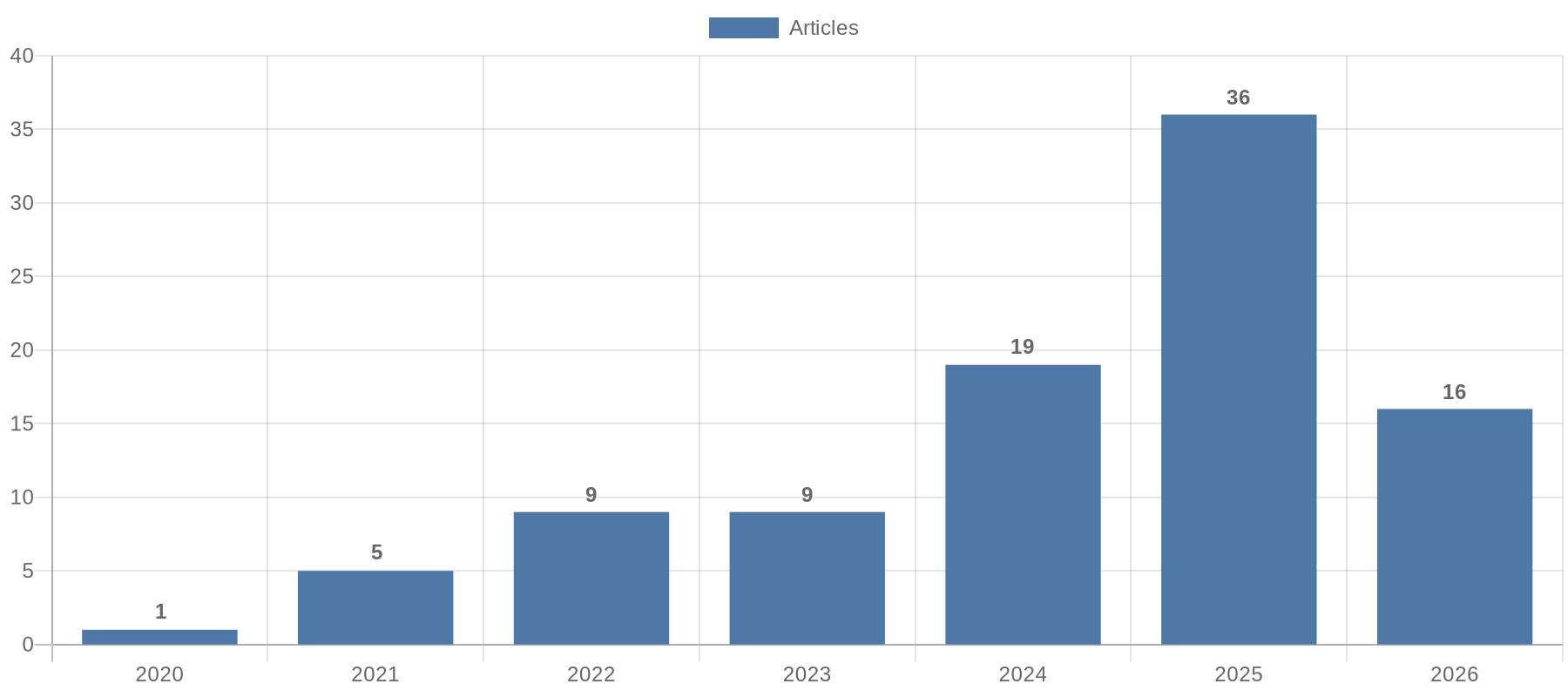
Online First: 62 article(s) • Page 1 / 6 Full archive (source) →
This review shows that PAD is not a niche vascular diagnosis but a massive, underrecognized global burden that concentrates sharply in diabetes, kidney disease, stroke, and other high-risk populations while often remaining clinically silent. The full read is worth it because it maps where PAD prevalence is truly highest, why reported rates vary so widely, and which patient groups should trigger much earlier ABI-based case finding.
Updated: 2026-04-03 • ID: peripheral-artery-disease-prevalence-20260402-211813-ec430229 • Editorial check 2026-04-03
This review shows that TCAR is not just another carotid stenting technique, but a potentially safer endovascular strategy with a recurrent signal for lower stroke and death risk than transfemoral CAS, especially when neuroprotection matters most. The full read is worth it because it clarifies where that advantage looks strongest, where the evidence is still mixed, and which anatomical, symptomatic, and restenotic subgroups may truly benefit from TCAR.
Updated: 2026-04-02 • ID: tcar-cas-20251124-214631-d1247267 • Editorial check 2026-04-02
This paper shows that OMT is not confined to musculoskeletal symptom relief, but sits at the intersection of pain modulation, autonomic regulation, neonatal care, and selected inpatient applications, with its strongest recurrent signal in chronic low back pain. The full read is worth it because it separates where the evidence is genuinely convincing, where mechanistic findings deepen the clinical story, and where the field still rests on mixed or low-certainty data.
Updated: 2026-04-02 • ID: osteopathic-manipulative-treatment-20260331-200533-ae83bafe • Editorial check 2026-04-02
This paper shows that OCD is not one single disease pattern, but a heterogeneous disorder shaped by brain-circuit dysfunction, comorbidity, and symptom subtype. The full read is worth it because it clarifies which treatments have the strongest evidence, which patients are harder to treat, and why long-term outcome may be better than many assume.
Updated: 2026-04-01 • ID: obsessive-compulsive-disorder-20260217-220441-99e2ed0c • Editorial check 2026-04-01
This review shows that PAD bypass outcomes are driven less by the operation alone than by who the patient is going into it: dialysis, CKD, conduit choice, and post-operative management repeatedly shape survival, limb outcomes, and graft durability. The full read is worth it because it clarifies where bypass still holds its strongest advantage over endovascular therapy, which patients benefit most, and which risk signals should change decisions before and after surgery.
Updated: 2026-03-31 • ID: pad-bypass-surgery-20260309-202932-2b85bc4c • Editorial check 2026-03-31
This paper shows that chronotype is not a trivial lifestyle preference, but a biologically meaningful pattern linked across a huge evidence base to mood, sleep, metabolism, behavior, and real-world performance. The full paper is worth reading because it clarifies how strongly eveningness clusters with risk, where the signal is most consistent, and whether aligning life with one’s internal clock could become a practical lever for better health and longevity.
Updated: 2026-03-31 • ID: morningness-eveningness-20260219-202619-d5075212 • Editorial check 2026-03-25
The aim of this paper is to synthesize research findings on the risk factors for the development of mesenteric ischemia and the clinical, laboratory, and radiological predictors of mortality and intestinal necrosis in affected patients. The review utilises 213 original studies with 1362960 total participants (topic deduplicated ΣN). The evidence map suggests that mesenteric ischemia risk and prognosis are dominated by a recurring triad of systemic vulnerability, hemodynamic compromise, and markers of advanced bowel injury. Among the clearest signals, lactate thresholds above 2–3 mmol/L, SOFA v…
Updated: 2026-03-30 • ID: mesenteric-ischemia-risk-factors-20260224-125504-c40d2c54 • Editorial check 2026-03-31
This systematic review aims to synthesize the current evidence regarding the prognostic and clinical utility of the WIfI classification system in patients with PAD, focusing on its ability to predict adverse outcomes such as major amputation, mortality, and wound healing, and its integration into modern vascular diagnostic and treatment workflows. The review utilises 80 original studies with 1180954 total participants (naïve ΣN). The WIfI classification system is a vital, evidence-based tool for the clinical management of PAD, offering superior prognostic value for limb salvage and mortality c…
Updated: 2026-03-30 • ID: peripheral-artery-disease-wifi-classification-20260130-155814-a133a318
Surgery does not end when the operation ends: this review shows that across oncology, bariatrics, orthopedics, transplantation, and vascular care, postoperative medication adherence is often the hidden determinant of recurrence, complications, and survival. The full read is worth it because it separates where adherence reliably fails, which barriers drive that failure, and which interventions actually help keep patients on treatment after discharge.
Updated: 2026-03-30 • ID: medication-adherence-after-surgery-20251126-192700-c08385f4 • Editorial check 2026-03-30
This paper shows where systematic reviews and scoping reviews truly diverge: one is built to answer narrow, bias-sensitive questions, the other to map broad, uncertain evidence landscapes. Read the full text to see how reporting quality, automation, rapid reviews, overviews, and emerging synthesis methods fit into one practical framework for choosing the right review design.
Updated: 2026-03-29 • ID: systematic-review-scoping-review-20260216-170956-32ffe7cd • Editorial check 2026-03-26
Medical machine translation may look fluent, but this review shows where it still breaks: semantic precision, cultural nuance, audience adaptation, and high-stakes clinical reliability. The full read is worth it because it separates the real strengths of MT in constrained tasks from the specific failure modes that still make expert human oversight essential.
Updated: 2026-03-29 • ID: limitations-medical-machine-translation__20250921_210051__e1a843d5 • Editorial check 2026-03-29
This paper shows that Rutherford classification is not just a staging label in acute limb ischemia, but one of the clearest bedside signals for who can still be saved, who needs immediate action, and where delay turns threatened limb into loss. The full read is worth it because it separates the real prognostic and treatment signal from observational noise—showing where endovascular therapy performs well, where Rutherford IIb becomes the decisive tipping point, and why timing still matters even within the same severity class.
Updated: 2026-03-29 • ID: acute-limb-ischemia-rutherford-classification-20260213-224153-0aca7d8d • Editorial check 2026-03-29
© 2026 SAIMSARA Journal • Impressum • Published by ML in Health Science GbR