☸️ SAIMSARA Journal
Online First Issues About Impressum

AI-Native Scoping Reviews & Evidence Mapping

ISSN 3054-3991 · ISSN record ↗
The Journal publishes AI-generated scoping reviews in medical and life sciences under editorial oversight, with transparent citations and versioning. Online First articles are continuously released by registered users. Issues are organized by domain and linked to an interactive AI RAG chatbot.
Articles reviewed for clinical integrity and proper references by the Editor-in-Chief are marked with .

Read aims & scope, publishing model & policies →

Issues

Domain issues provide an archive / table of contents and a paired RAG agent.
Vascular Health icon
Vascular Health
Issue 1 • Vol 1 (2026) in progress

Longevity icon
Longevity
Issue 2 • Vol 1 (2026) in progress
Digital Health icon
Digital Health
Issue 3 • Vol 1 (2026) in progress
To propose a new domain issue or suggest curation criteria, use Impressum contact.
Online First: 72 article(s) • Page 2 / 6 Full archive (source) →
This review shows that rare vascular diseases are not just isolated curiosities: many are driven by shared pathways of vascular fragility, abnormal remodeling, and delayed diagnosis. It highlights where genetics, imaging, and targeted therapies are already turning rare vascular biology into practical clinical decisions.
Updated: 2026-04-11 • ID: rare-vascular-disease-20260310-060855-ac7391aa • Editorial check 2026-04-12
This paper shows that prolonged fasting is not a single “healthy” or “harmful” phenomenon, but a powerful biological stressor that can trigger major systemic remodeling while producing very different clinical effects depending on duration, population, and context. It is worth reading because it maps where fasting may improve metabolism and perioperative care, where it may carry real risk, and how a broad, mixed literature can be turned into a clinically usable evidence landscape.
Updated: 2026-04-11 • ID: prolonged-fasting-20260222-221118-93074bf6 • Editorial check 2026-03-21
WIfI combines true biological risk signals such as ischemia with limb-level consequences such as wound burden and infection to answer the central clinical question in PAD: is limb salvage still realistically achievable? This evidence map shows how WIfI stage translates into real-world amputation risk across clinical scenarios, and where its predictive value becomes strongest in modern decision-making.
Updated: 2026-04-11 • ID: peripheral-artery-disease-wifi-classification-20260130-155814-a133a318 • Editorial check 2026-04-11
PAD is not failing for lack of options — it is failing because the right options are too often used in isolation, too late, or not at all. This review shows where the strongest treatment signals truly are, from rivaroxaban-plus-aspirin and exercise therapy to IVUS-guided revascularization, and why real progress depends on combining them into one strategy.
Updated: 2026-04-11 • ID: peripheral-artery-disease-treatment-20260127-230342-fa4dc087
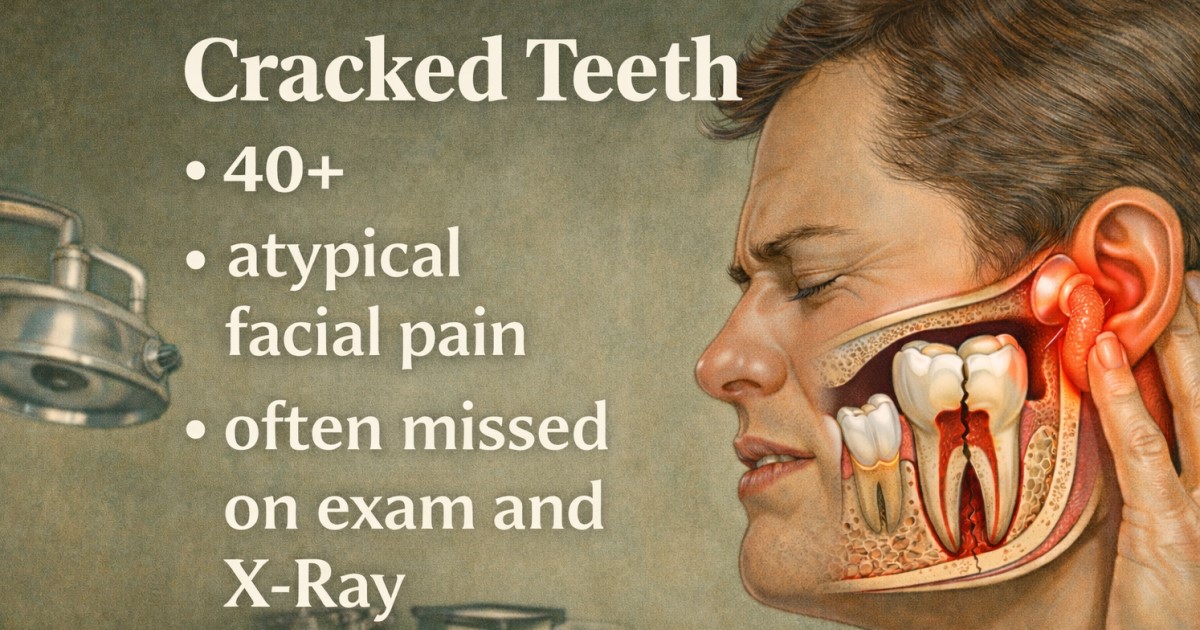
Some of the most dangerous cracked teeth are the ones that still look normal. This review shows why early recognition and timely cuspal protection matter — before a subtle crack becomes a restorative and biologic disaster.
Updated: 2026-04-10 • ID: cracked-tooth-20260409-165131-5da10de8 • Editorial check 2026-04-10
This review shows that PAD diagnostics are shifting beyond resting ABI toward a multimodal future: post-exercise testing, advanced imaging, biomarkers, and AI repeatedly signal earlier and more precise detection, especially in patients where standard methods fail, such as those with diabetes. Read the full paper to see which emerging tools look truly promising, where the evidence is strongest, and which “innovations” still lack the validation needed for routine practice.
Updated: 2026-04-08 • ID: diagnostics-peripheral-artery-disease-20260309-221105-8b81cdc8 • Editorial check 2026-03-26
Retraction does not end the life of bad science — this review shows how misconduct-driven papers can keep shaping citations, clinical thinking, and public belief long after formal withdrawal. Drawing on 129 references, it maps why retractions fail, where the system breaks, and why the hidden afterlife of invalid research matters far more than most readers realize.
Updated: 2026-04-08 • ID: scientific-research-retraction-20260408-160339-ada9ec85 • Editorial check 2026-04-08
PAD is not just blocked arteries — this review shows it as a biologically complex disease driven by endothelial failure, oxidative stress, metabolic myopathy, mitochondrial dysfunction, and emerging signals from gut metabolites, extracellular vesicles, and non-coding RNA pathways. The full read is worth it because it maps where the strongest mechanistic evidence lies, which biomarkers may matter next, and which pathophysiologic signals could reshape future PAD diagnostics and targeted therapy.
Updated: 2026-04-07 • ID: peripheral-artery-disease-pathophysiology-20260308-215923-8ffb6594 • Editorial check 2026-04-07
PAD is not just undertreated — it is systematically undertreated despite repeated signals that proper medication changes survival, cardiovascular risk, and limb outcomes. This review shows where the real gaps are, which therapies carry the strongest signal, and why better discharge and follow-up prescribing may be one of the most actionable opportunities in vascular care.
Updated: 2026-04-07 • ID: peripheral-artery-disease-medication-20260403-212905-3b5bca76 • Editorial check 2026-04-07
This review shows that chronic pain is not only a symptom burden, but a clinically important suicide-risk context shaped by depression, sleep disturbance, mental defeat, catastrophizing, opioid transitions, and functional loss. The full read is worth it because it maps exactly which pain populations and care settings carry the strongest signal, where the evidence is most consistent, and which modifiable targets may help move suicide prevention in pain care from intuition to strategy.
Updated: 2026-04-04 • ID: suicide-chronic-pain-20260404-152611-5e0bf3a7 • Editorial check 2026-04-04
This review shows that anticoagulation in PAD is not a simple “more is better” story: low-dose rivaroxaban plus aspirin delivers the clearest reduction in limb and cardiovascular events, but the benefit is tightly linked to patient selection and bleeding risk. The full read is worth it because it maps exactly where dual pathway inhibition is strongest, where full-dose or nonspecific anticoagulation may backfire, and how PAD changes the antithrombotic strategy in real-world settings like revascularization, VTE overlap, and atrial fibrillation.
Updated: 2026-04-04 • ID: peripheral-artery-disease-anticoagulation-20260129-172912-ac354ec8 • Editorial check 2026-04-04
This review shows that PAD is not a niche vascular diagnosis but a massive, underrecognized global burden that concentrates sharply in diabetes, kidney disease, stroke, and other high-risk populations while often remaining clinically silent. The full read is worth it because it maps where PAD prevalence is truly highest, why reported rates vary so widely, and which patient groups should trigger much earlier ABI-based case finding.
Updated: 2026-04-03 • ID: peripheral-artery-disease-prevalence-20260402-211813-ec430229 • Editorial check 2026-04-03
© 2026 SAIMSARA Journal • Impressum • Published by ML in Health Science GbR