Vascular Health icon

☸️SAIMSARA Journal
Vascular Health: Articles
Issue 1, Volume 1, 2026 in progress

35 result(s) • Page 1 / 3
This review shows that anticoagulation in PAD is not a simple “more is better” story: low-dose rivaroxaban plus aspirin delivers the clearest reduction in limb and cardiovascular events, but the benefit is tightly linked to patient selection and bleeding risk. The full read is worth it because it maps exactly where dual pathway inhibition is strongest, where full-dose or nonspecific anticoagulation may backfire, and how PAD changes the antithrombotic strategy in real-world settings like revascularization, VTE overlap, and atrial fibrillation.
Doc: ANTICOAGULATION_PAD_PM • v2026-04-03 • Editorial check 2026-04-04
This review shows that PAD is not a niche vascular diagnosis but a massive, underrecognized global burden that concentrates sharply in diabetes, kidney disease, stroke, and other high-risk populations while often remaining clinically silent. The full read is worth it because it maps where PAD prevalence is truly highest, why reported rates vary so widely, and which patient groups should trigger much earlier ABI-based case finding.
Doc: PAD_PREVALENCE_PM • v2026-04-02 • Editorial check 2026-04-03
This review shows that TCAR is not just another carotid stenting technique, but a potentially safer endovascular strategy with a recurrent signal for lower stroke and death risk than transfemoral CAS, especially when neuroprotection matters most. The full read is worth it because it clarifies where that advantage looks strongest, where the evidence is still mixed, and which anatomical, symptomatic, and restenotic subgroups may truly benefit from TCAR.
Doc: TCAR_VS_CAS_PM • v2026-04-02 • Editorial check 2026-04-02
The aim of this paper is to synthesize research findings on the risk factors for the development of mesenteric ischemia and the clinical, laboratory, and radiological predictors of mortality and intestinal necrosis in affected patients. The review utilises 213 original studies with 1362960 total participants (topic deduplicated ΣN). The evidence map suggests that mesenteric ischemia risk and prognosis are dominated by a recurring triad of systemic vulnerability, hemodynamic compromise, and markers of advanced bowel injury. Among the clearest signals, lactate thresholds above 2–3 mmol/L, SOFA v…
Doc: MESENTERIC_ISCHEMIA_PM • v2026-03-30 • Editorial check 2026-03-31
This review shows that PAD bypass outcomes are driven less by the operation alone than by who the patient is going into it: dialysis, CKD, conduit choice, and post-operative management repeatedly shape survival, limb outcomes, and graft durability. The full read is worth it because it clarifies where bypass still holds its strongest advantage over endovascular therapy, which patients benefit most, and which risk signals should change decisions before and after surgery.
Doc: PAD_BYPASS_SS • v2026-03-09 • Editorial check 2026-03-31
Surgery does not end when the operation ends: this review shows that across oncology, bariatrics, orthopedics, transplantation, and vascular care, postoperative medication adherence is often the hidden determinant of recurrence, complications, and survival. The full read is worth it because it separates where adherence reliably fails, which barriers drive that failure, and which interventions actually help keep patients on treatment after discharge.
Doc: MEDICATION_ADHERENCE_PM • v2026-03-30 • Editorial check 2026-03-30
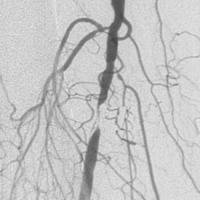
This systematic review aims to synthesize the current evidence regarding the prognostic and clinical utility of the WIfI classification system in patients with PAD, focusing on its ability to predict adverse outcomes such as major amputation, mortality, and wound healing, and its integration into modern vascular diagnostic and treatment workflows. The review utilises 80 original studies with 1180954 total participants (naïve ΣN). The WIfI classification system is a vital, evidence-based tool for the clinical management of PAD, offering superior prognostic value for limb salvage and mortality c…
Doc: PAD_WIFI_SS • v2026-03-04
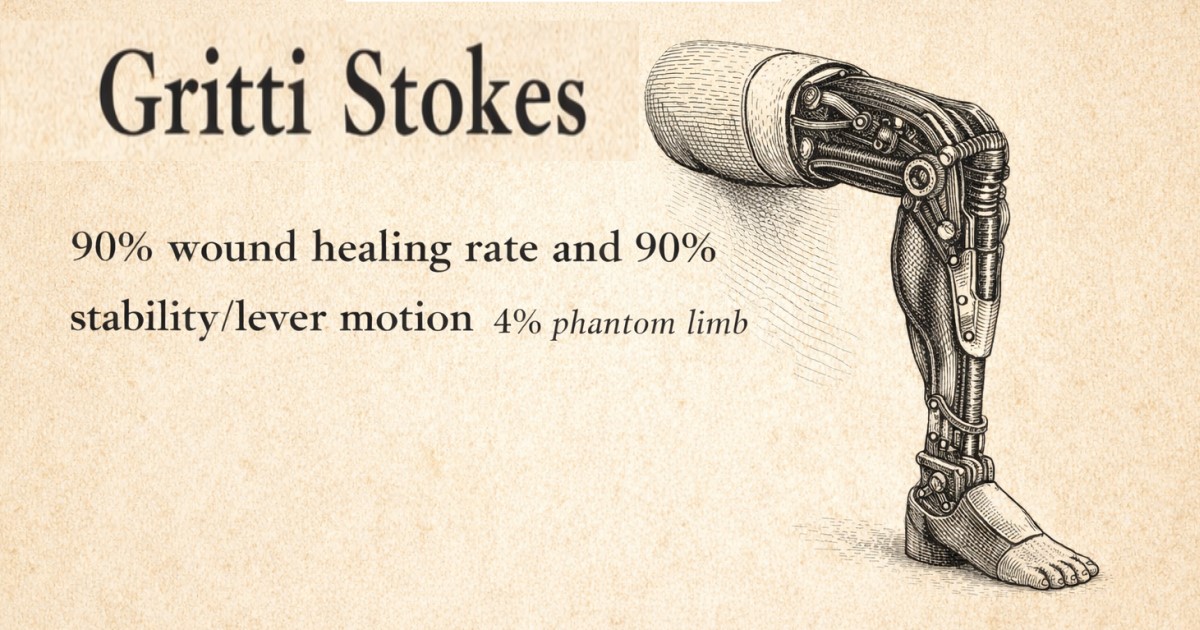
This paper shows that Gritti-Stokes amputation may offer more than limb removal alone: in selected patients it appears to preserve a more stable, functional stump with surprisingly strong links to prosthetic fitting, mobility, and even longer-term survival. The full paper is worth reading because it clarifies where this old technique still has real modern value, which patients may benefit most, and why its outcomes may compare more favorably than many assume.
Doc: GRITTI_STOKES_SS • v2026-03-06 • Editorial check 2026-03-29
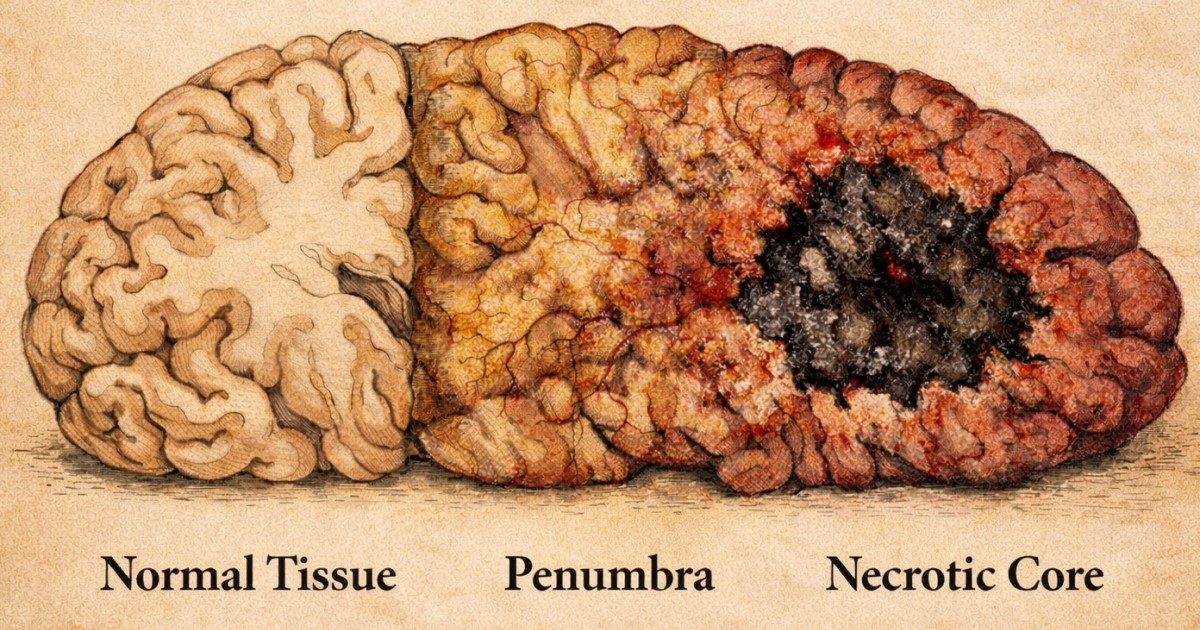
This paper shows that the ischemic penumbra is not just a fading border around stroke core, but a dynamic and biologically active therapeutic target whose fate depends on collaterals, metabolism, BBB integrity, and how fast true reperfusion is achieved. The full read is worth it because it separates the real clinical signal from the hype—showing where tissue-based stroke decisions already work, where imaging and software still disagree, and which next-generation strategies may actually preserve salvageable brain.
Doc: ISCHEMIC_PENUMBRA_PM • v2026-03-29 • Editorial check 2026-03-29
This paper shows that PAD does not affect women and men in the same way: women are often treated less aggressively and face more perioperative complications, while men more often carry the burden of amputation, mortality, and severe limb outcomes. The full paper is worth reading because it makes clear where the true gender gap lies in PAD—not just in prevalence, but in diagnosis, treatment, and what happens after intervention.
Doc: PAD_GENDER_SS • v2026-03-28 • Editorial check 2026-03-28
This paper shows that PAD risk is driven mainly by smoking and diabetes, but is also strongly shaped by age, hypertension, dyslipidemia, inflammation, and social disadvantage. The full paper is worth reading because it makes clear which factors matter most, which newer risk signals are emerging, and why PAD is still too often missed despite its major impact on limb loss and cardiovascular death.
Doc: PAD_RISK_FACTORS_PM • v2026-03-01 • Editorial check 2026-03-27
This review shows that PAD diagnostics are shifting beyond resting ABI toward a multimodal future: post-exercise testing, advanced imaging, biomarkers, and AI repeatedly signal earlier and more precise detection, especially in patients where standard methods fail, such as those with diabetes. Read the full paper to see which emerging tools look truly promising, where the evidence is strongest, and which “innovations” still lack the validation needed for routine practice.
Doc: DIAGNOSTICS_PAD_SS • v2026-03-09 • Editorial check 2026-03-26