☸️ SAIMSARA Journal
Online First Issues About Impressum

AI-Native Scoping Reviews & Evidence Mapping

ISSN 3054-3991 · ISSN record ↗
The Journal publishes AI-generated scoping reviews in medical and life sciences under editorial oversight, with transparent citations and versioning. Online First articles are continuously released by registered users. Issues are organized by domain and linked to an interactive AI RAG chatbot.
Articles reviewed for clinical integrity and proper references by the Editor-in-Chief are marked with .

Read aims & scope, publishing model & policies →

Issues

Domain issues provide an archive / table of contents and a paired RAG agent.
Vascular Health icon
Vascular Health
Issue 1 • Vol 1 (2026) in progress

Longevity icon
Longevity
Issue 2 • Vol 1 (2026) in progress
To propose a new domain issue or suggest curation criteria, use Impressum contact.
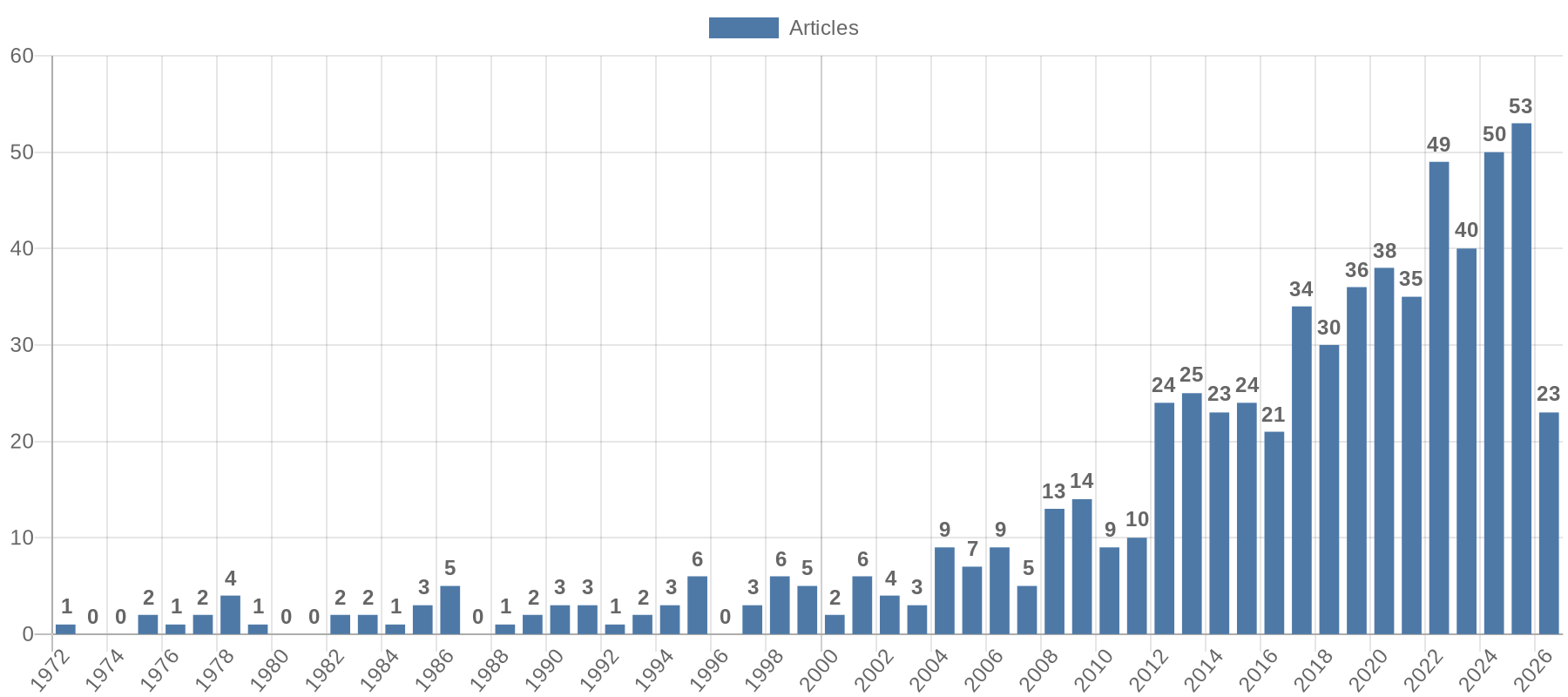
Online First: 63 article(s) • Page 4 / 6 Full archive (source) →
This review shows that COVID-19 vaccination was generally linked to lower mortality, especially in older and high-risk groups, but that protection decreased over time and improved again after booster doses. Read the full paper to see where the evidence is strongest, which groups benefit most, and where important safety and interpretation questions remain.
Updated: 2026-03-23 • ID: covid-vaccine-mortality-20251026-192337-047981e6 • Editorial check 2026-03-23
This paper shows that daylight saving time is not a harmless calendar ritual: the clock changes align with measurable spikes in mortality, suicide, cardiovascular events, sleep loss, and road danger, with the spring and autumn transitions carrying distinct risks. Read the full paper to see where the strongest signals emerge, which outcomes remain inconsistent, and why the evidence increasingly points toward ending biannual clock changes rather than treating them as a neutral social habit.
Updated: 2026-03-23 • ID: daylight-saving-time-health-20251028-084859-13cb2638 • Editorial check 2026-03-23
This paper shows that coffee is not simply “good” or “bad” for health: moderate intake is repeatedly linked with lower risks of stroke, dementia, diabetes, and death, while higher intake and certain coffee types can also carry harm signals. Read the full paper to see where the benefits look most convincing, where the evidence becomes conflicting, and which patients may need more caution than the usual “2–3 cups a day” message suggests.
Updated: 2026-03-23 • ID: coffee-20260210-060020-648ea100 • Editorial check 2026-03-23
This paper shows that coffee is not a proven anti-aging therapy, yet the mapped evidence still suggests a biologically plausible link to longer survival through oxidative-stress and insulin/IGF-1 pathways, with human data pointing to modest benefit rather than clear harm. Read the full text to see where the real signal lies, which findings are only indirect or genotype-specific, and why the apparent longevity story of coffee is much more nuanced than popular health claims suggest.
Updated: 2026-03-23 • ID: coffee-longevity-20251005-170701-b9937bbd • Editorial check 2026-03-22
This paper shows that vegetarian and plant-based diets are not just ethical choices, but practical weight-loss strategies that can also improve insulin sensitivity, blood pressure, liver fat, and lipid profiles. It is worth reading because it maps which plant-based approaches seem to work best, where the evidence is strongest, and why “plant-based” is not one single diet.
Updated: 2026-03-23 • ID: vegetarian-weight-loss-20260320-163748-be015a04 • Editorial check 2026-03-20
This paper shows that semaglutide is far more than a weight-loss drug: across a vast evidence base it emerges as a multi-system therapy with meaningful effects on obesity, diabetes, cardiovascular risk, kidney disease, and even liver and neurodegenerative pathways. The full paper is worth reading because it separates the real breadth of benefit from the hype, showing where the evidence is strongest, where safety and access concerns matter, and how semaglutide may be reshaping modern metabolic medicine.
Updated: 2026-03-23 • ID: semaglutide-20260106-110453-45190890 • Editorial check 2026-03-15
This paper shows that vascular calcification in CKD is not a passive byproduct of renal failure, but an active, biologically driven process fueled by phosphate burden, uremic toxins, inflammation, and VSMC transdifferentiation. The full paper is worth reading because it maps where the strongest mechanistic and clinical signals converge across 1,230 original studies, and highlights which biomarkers and interventions may actually become actionable in routine CKD care.
Updated: 2026-03-22 • ID: chronic-kidney-disease-vascular-calcification-20260312-123411-449d96eb • Editorial check 2026-03-15
Y chromosome loss emerges in this paper not as a passive marker of ageing, but as a potentially central male-specific biological signal linked to cardiovascular death, cancer progression, neurodegeneration, and immune dysfunction across a massive evidence base. The full paper is worth reading because it shows where this signal is strongest, how consistent it is across 1,048 original studies, and why LOY may become both a prognostic biomarker and a future therapeutic target.
Updated: 2026-03-22 • ID: chromosome-loss-20260222-084715-ab15307b • Editorial check 2026-03-15
This paper shows that the choice between carotid endarterectomy and carotid stenting is not just a technical preference, but a clinically meaningful trade-off between stroke risk, myocardial infarction risk, and long-term durability. Read the full paper to see which patients truly benefit from CEA as the default option, where CAS still has a justified role, and how 670 original studies map the evidence behind that decision.
Updated: 2026-03-22 • ID: cea-cas-20251122-093634-10028c04 • Editorial check 2026-03-22
PSV is not just a number for grading carotid stenosis—it can signal restenosis risk, hemodynamic compromise, plaque instability, and response to revascularization, but only when interpreted in the right anatomical and technical context. Read the full paper to see where PSV truly adds clinical value, where it can mislead, and how the evidence supports smarter carotid ultrasound decision-making.
Updated: 2026-03-21 • ID: carotid-stenosis-psv-20260320-135414-a8e14259 • Editorial check 2026-03-21
This paper shows that carotid stenosis is not a rare incidental finding but a patterned disease concentrated in stroke, TIA, and clearly defined high-risk groups—while broad screening in low-yield populations adds little. It is worth reading because it maps where carotid imaging truly matters and why future risk assessment may need to move beyond percent narrowing toward plaque vulnerability.
Updated: 2026-03-21 • ID: carotid-stenosis-prevalence-20260313-203533-32f9c0e1 • Editorial check 2026-03-20
The aim of this paper is to systematically review and synthesize the available evidence on the health effects, both beneficial and adverse, of sauna bathing in human populations, identifying key findings, clinical implications, and future research directions. The review utilises 519 original studies with 541510 total participants (topic deduplicated ΣN). Across the mapped evidence, frequent sauna bathing shows a consistent signal of lower major cardiometabolic and neurological risk, including associations such as a 37% lower risk of sudden cardiac death with 4–7 sessions/week versus 1 session/…
Updated: 2026-03-21 • ID: sauna-health-20251012-141121-e7c389fb • Editorial check 2026-03-21
© 2026 SAIMSARA Journal • Impressum • Published by ML in Health Science GbR