☸️SAIMSARA Journal
Online First Issues About Impressum

AI-Native Scoping Reviews & Evidence Mapping

ISSN 3054-3991 · ISSN record ↗
The Journal publishes machine-generated scoping reviews in medical and life sciences under human-editorial oversight, with transparent citations and versioning. Online First articles are continuously released by registered users. Issues are organized by domain and linked to an interactive AI RAG chatbot.
Editor's Choice papers are marked with .

Read aims & scope, publishing model & policies →

Issues

Domain issues provide a same-page filtered article view and a paired RAG agent.
Cardiac & Vascular Health icon
Cardiac & Vascular Health
Issue 1 • Vol 1 (2026) in progress

Longevity & Public Health icon
Longevity & Public Health
Issue 2 • Vol 1 (2026) in progress

Digital Health & Biotech icon
Digital Health & Biotech
Issue 3 • Vol 1 (2026) in progress
Mental & Neurological Health icon
Mental & Neurological Health
Issue 4 • Vol 1 (2026) in progress

Sports Medicine icon
Sports Medicine
Issue 5 • Vol 1 (2026) in progress
Pain Medicine icon
Pain Medicine
Issue 6 • Vol 1 (2026) in progress
Infectious Diseases icon
Infectious Diseases
Issue 7 • Vol 1 (2026) in progress
Skin & Aesthetics icon
Skin & Aesthetics
Issue 8 • Vol 1 (2026) in progress
Gastrointestinal & Metabolic Health icon
Gastrointestinal & Metabolic Health
Issue 9 • Vol 1 (2026) in progress

Head and Neck Health icon
Head and Neck Health
Issue 10 • Vol 1 (2026) in progress
To propose a new domain issue or suggest curation criteria, use Impressum contact.
Reset All issues
Online First: 111 article(s) • Page 1 / 10 Full archive (source) →
Showing: Cardiac & Vascular Health · Chat with this issue →
Cardiac & Vascular Health Cardiac & Vascular Health
Endovascular atherectomy delivers high technical success across peripheral, coronary, and selected non-atherosclerotic vascular conditions, yet its long-term clinical advantage remains highly dependent on anatomy, device, and treatment strategy. The full review reveals where atherectomy adds real value, where risks and reinterventions rise, and which applications remain unsupported.
Updated: 2026-06-20 • ID: endovascular-atherectomy-20260605-051520-99fa2e74
Cardiac & Vascular Health Cardiac & Vascular Health
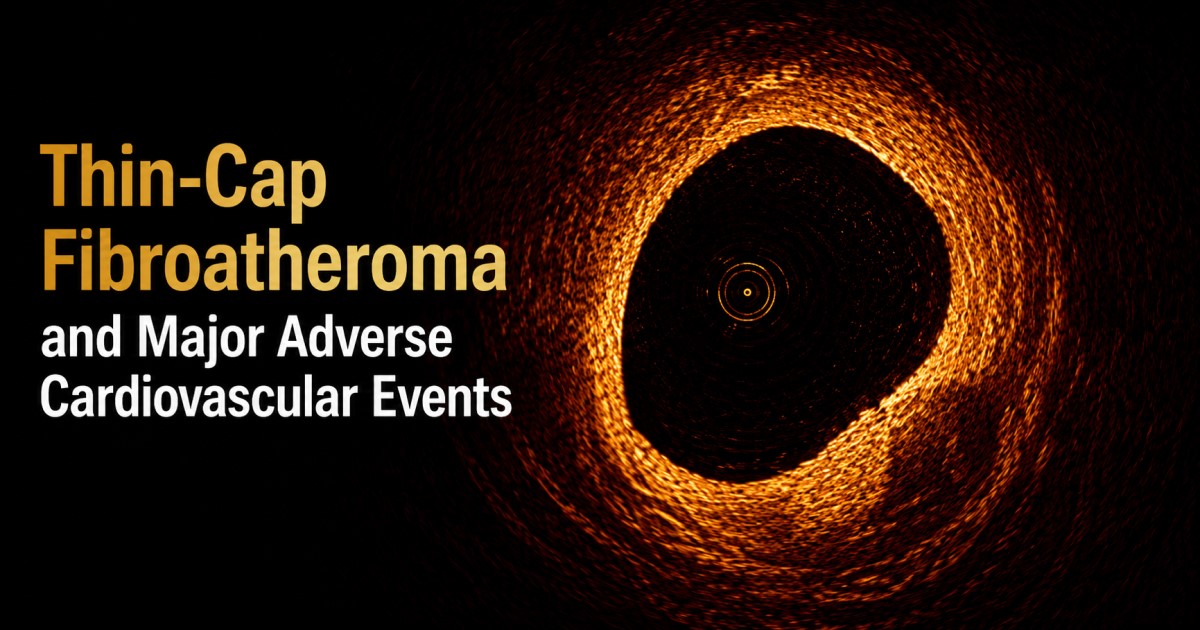
Thin-cap fibroatheroma identifies dangerous coronary plaques that may trigger major cardiovascular events even when stenosis is non-obstructive or FFR is negative. The full review reveals how TCFA can refine risk stratification, how lipid-lowering therapy may stabilize vulnerable plaques, and whether imaging-guided intervention could change outcomes.
Updated: 2026-06-16 • ID: thin-cap-fibroatheroma-20260603-154358-74e16474 • Editorial check 2026-06-16
Cardiac & Vascular Health Cardiac & Vascular Health
Interatrial shunts can either unload the failing left atrium or drive stroke, hypoxemia, and right-heart deterioration—depending on flow direction and the underlying cardiac phenotype. Built from 218 references, 502 original studies, and 77,138 observations, this review reveals which patients may benefit from shunt creation, who may be harmed, and when closure becomes clinically decisive.
Updated: 2026-06-16 • ID: interatrial-shunt-20260603-195654-46ef58f3
Cardiac & Vascular Health Cardiac & Vascular Health
Jogging delivers broad cardiovascular benefits, from improved fitness, blood pressure, and lipid profiles to lower mortality, but it also carries a small acute risk in susceptible individuals. The full read reveals the safest exercise dose, the populations most likely to benefit, and the warning signs that should shape personalized cardiovascular screening and prescription.
Updated: 2026-06-12 • ID: jogging-cardiovascular-20260531-172305-228fb6f6 • Editorial check 2026-06-12
Cardiac & Vascular Health Cardiac & Vascular Health
Routine preoperative ECG remains a clinical paradox: often low-yield in low-risk noncardiac surgery, yet potentially powerful when combined with biomarkers and AI-driven waveform analysis. The full read shows where ECG can be safely de-implemented, where it still uncovers clinically relevant hidden disease, and how AI-ECG may redefine perioperative cardiac risk stratification.
Updated: 2026-06-12 • ID: routine-preoperative-ecg-noncardiac-surgery-20260531-133914-5e9e7a10
Cardiac & Vascular Health Cardiac & Vascular Health
Routine preoperative echocardiography before noncardiac surgery often adds little in unselected patients, with low actionable yield and weaker prediction than biomarkers such as NT-proBNP. The full read shows where echocardiography still matters, when stress echo or targeted TTE is justified, and how clinicians can move from routine imaging to smarter, risk-guided perioperative assessment.
Updated: 2026-06-11 • ID: routine-preoperative-echocardiography-noncardiac-surgery-20260531-133732-32c0f8b3
Cardiac & Vascular Health Cardiac & Vascular Health
EVAR may succeed in the operating room, but its durability is decided years later through surveillance, endoleak detection, sac behavior, and timely reintervention. This review maps the full evidence—from imaging and compliance failures to rupture risk and personalized follow-up—making the complete read valuable for anyone managing long-term EVAR outcomes.
Updated: 2026-06-07 • ID: evar-follow-20260529-192155-27fa1158
Cardiac & Vascular Health Cardiac & Vascular Health
PCSK9 is no longer just an LDL-receptor story: this review maps 642 references on its role across lipid lowering, cardiovascular outcomes, inflammation, thrombosis, metabolism, kidney disease, neurobiology, pregnancy, and cancer immunity. The full read shows where PCSK9 inhibition is already clinically strong, where pleiotropic effects may open new therapeutic fields, and where safety or access barriers still limit translation.
Updated: 2026-06-06 • ID: pcsk9-20260520-184110-c25dcb0d • Editorial check 2026-06-06
Cardiac & Vascular Health Cardiac & Vascular Health
Cerebral hyperperfusion syndrome is not just a rare post-procedural complication — it is a dangerous failure of cerebrovascular autoregulation when restored flow overwhelms chronically exhausted brain perfusion reserve. This full SAIMSARA read maps 475 original studies, 192 key references, and 477,299 observations to show where CHS risk emerges after carotid, moyamoya, bypass, thrombectomy, and posterior circulation revascularization — and why blood-pressure governance, perfusion monitoring, staged strategies, and seizure vigilance may decide the clinical outcome.
Updated: 2026-06-04 • ID: cerebral-hyperperfusion-syndrome-20260526-172734-6ed87781
Cardiac & Vascular Health Cardiac & Vascular Health
Fractional flow reserve is no longer just a coronary pressure number—it is a decision framework that reshapes revascularization, deferral, imaging, plaque assessment, and vascular risk stratification across clinical settings. This full read maps 3,488 original studies, 615 key references, and more than 42.4 million observations to show where FFR is reliable, where it fails, and why physiology must increasingly be combined with plaque and microvascular context.
Updated: 2026-06-03 • ID: fractional-flow-reserve-20260525-180030-5168025d
Cardiac & Vascular Health Cardiac & Vascular Health
Gender-affirming hormone therapy is not a single cardiovascular exposure: testosterone, estrogen route, anti-androgen choice, age, comorbidity, and monitoring all shift the risk picture. This full read maps 319 original studies, 114 key references, and more than 15.7 million observations to clarify where GAHT appears safer, where vascular risk signals emerge, and what clinicians should watch before relying on generic sex-based risk calculators.
Updated: 2026-06-03 • ID: gender-affirming-hormone-therapy-cardiovascular-risk-20260524-153054-9d970a85
Cardiac & Vascular Health Cardiac & Vascular Health
This review shows that ramipril and candesartan are not simply interchangeable RAAS drugs: blood-pressure control is broadly comparable, but the evidence separates them by exercise BP response, tolerability, diastolic function, anti-fibrotic signals, and perioperative fibrinolytic effects. The full read maps 37 references across 33 original studies and 399,243 observations, clarifying where candesartan, ramipril, or single-pill combinations may offer the more rational clinical choice.
Updated: 2026-06-02 • ID: ramipril-candesartan-20260524-084539-e1a78e09
© 2026 SAIMSARA Journal • Impressum • Published by ML in Health Science GbR