☸️SAIMSARA Journal
Online First Issues About Impressum

AI-Native Scoping Reviews & Evidence Mapping

ISSN 3054-3991 · ISSN record ↗
The Journal publishes machine-generated scoping reviews in medical and life sciences under human-editorial oversight, with transparent citations and versioning. Online First articles are continuously released by registered users. Issues are organized by domain and linked to an interactive AI RAG chatbot.
Editor's Choice papers are marked with .

Read aims & scope, publishing model & policies →

Issues

Domain issues provide a same-page filtered article view and a paired RAG agent.
Cardiac & Vascular Health icon
Cardiac & Vascular Health
Issue 1 • Vol 1 (2026) in progress

Longevity & Public Health icon
Longevity & Public Health
Issue 2 • Vol 1 (2026) in progress

Digital Health & Biotech icon
Digital Health & Biotech
Issue 3 • Vol 1 (2026) in progress
Mental & Neurological Health icon
Mental & Neurological Health
Issue 4 • Vol 1 (2026) in progress

Sports Medicine icon
Sports Medicine
Issue 5 • Vol 1 (2026) in progress
Pain Medicine icon
Pain Medicine
Issue 6 • Vol 1 (2026) in progress
Infectious Diseases icon
Infectious Diseases
Issue 7 • Vol 1 (2026) in progress
Skin & Aesthetics icon
Skin & Aesthetics
Issue 8 • Vol 1 (2026) in progress
Gastrointestinal & Metabolic Health icon
Gastrointestinal & Metabolic Health
Issue 9 • Vol 1 (2026) in progress

To propose a new domain issue or suggest curation criteria, use Impressum contact.
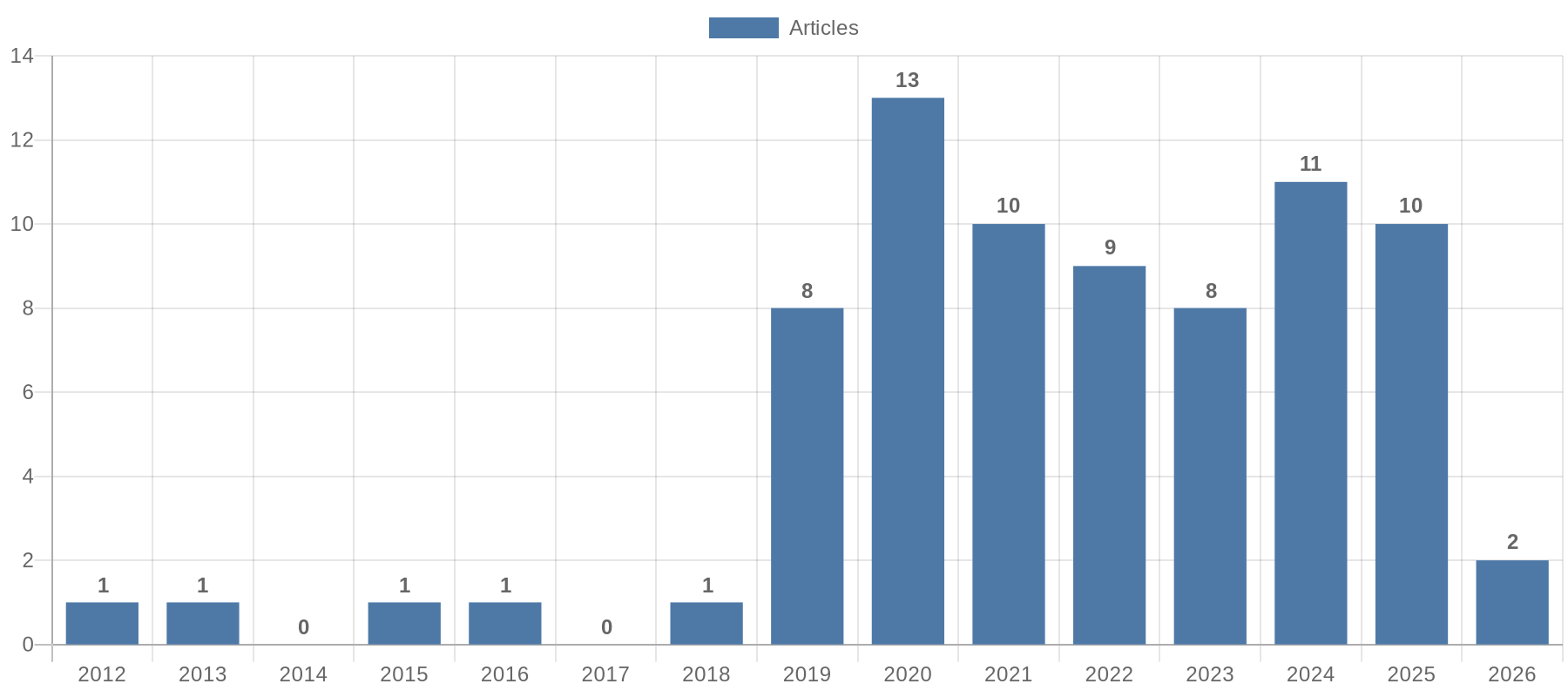
Online First: 206 article(s) • Page 17 / 18 Full archive (source) →
Sports Medicine Sports Medicine
This review turns 1,815 original studies and 919,224 participants into a structured evidence map showing when barefoot walking/running may improve mechanics, balance, foot strength, or knee loading — and when it becomes clinically risky. It is especially useful for clinicians, runners, coaches, and researchers who need a clear, citation-linked map of barefoot biomechanics, diabetic-foot risk, falls, infection exposure, and safe transition strategies.
Updated: 2026-05-07 • ID: barefoot-20260429-204222-5c0fa9a6
Cardiac & Vascular Health Cardiac & Vascular Health
The main message of this paper is that current treatment of atherosclerosis relies mainly on standard preventive therapies—cholesterol lowering, combination lipid therapy, and blood-pressure control—whereas future treatment may come from more precise targeting of inflammation, endothelial injury, oxidative stress, immune pathways, and plaque biology. The review maps 47 original research topics, from combination therapies to cannabinoid receptor modulation, and 10 recurrent directions in the non-original literature, from lipid reduction to personalized imaging of plaque burden.
Updated: 2026-05-07 • ID: atherosclerosis-treatment-20260313-194943-367e2f7a
Cardiac & Vascular Health Cardiac & Vascular Health
This review shows that atherosclerosis is not merely a late-life clinical disease, but a widespread silent substrate detectable across middle age, inflammatory disease, metabolic risk, genetic susceptibility, and even apparently low-risk populations. The full paper is worth reading because it maps where conventional risk scores may underestimate real vascular burden—and where selective imaging could redefine prevention.
Updated: 2026-05-07 • ID: atherosclerosis-prevalence-20260424-174325-4cd28ee4
Cardiac & Vascular Health Cardiac & Vascular Health
This paper shows that asymptomatic carotid stenosis is no longer a simple “operate-or-observe” problem: under modern medical therapy stroke risk is often lower than once feared, yet a biologically high-risk subgroup still emerges through plaque vulnerability, hemodynamic failure, microemboli, and covert brain injury. The full review is worth reading because it maps where intervention may still matter, where overtreatment is likely, and how the field is shifting from stenosis percentage alone toward truly individualized risk stratification.
Updated: 2026-05-07 • ID: asymptomatic-carotid-stenosis-20260203-110827-427b99fa
Cardiac & Vascular Health Cardiac & Vascular Health
This review shows where clopidogrel truly outperforms aspirin, where the advantage disappears, and why the answer changes across PCI, stroke, PAD, gastrointestinal risk, and surgery. It turns a common everyday antiplatelet choice into a clinically practical evidence map of who may benefit more from clopidogrel, when aspirin may still be safer, and where the real uncertainties remain.
Updated: 2026-05-07 • ID: aspirin-clopidogrel-20250924-152723-2e3a8ec9
Cardiac & Vascular Health Cardiac & Vascular Health
This review shows that aortic dissection treatment is no longer a simple “Type A surgery, Type B medicine” paradigm: outcomes now depend on timing, anatomy, malperfusion, remodeling strategy, and lifelong surveillance. The full paper is worth reading because it maps where TEVAR, open surgery, hybrid repair, medical stabilization, and emerging pharmacological strategies truly change survival—and where uncertainty still demands careful patient selection.
Updated: 2026-05-07 • ID: aortic-dissection-treatment-20260428-082424-224e8515
Cardiac & Vascular Health Cardiac & Vascular Health
Aortic dissection is not predicted by diameter alone: hypertension, genetics, aortic geometry, pregnancy, medications, sleep apnea, inflammation, and environmental triggers all reshape individual risk. The full paper is worth reading because it maps where classic thresholds fail — and where modern risk stratification may prevent missed catastrophic events.
Updated: 2026-05-07 • ID: aortic-dissection-risk-factors-20260426-135008-02c92be3
Cardiac & Vascular Health Cardiac & Vascular Health
Aortic dissection prognosis is not determined by anatomy alone: early malperfusion, shock, inflammatory activation, renal injury, and false-lumen remodeling sharply define survival risk. This review maps 173 references to show which clinical, biomarker, genetic, and imaging signals can guide urgent triage, TEVAR/open-surgery strategy, and long-term surveillance intensity.
Updated: 2026-05-07 • ID: aortic-dissection-prognosis-20260428-082518-4e2d4fd3
Cardiac & Vascular Health Cardiac & Vascular Health
Aortic dissection prevalence is not one number — it changes dramatically by clinical setting, genetics, anatomy, sleep apnea, mental health burden, and referral selection. This review is worth reading because it maps where “rare disease” thinking fails and where targeted screening may reveal preventable high-risk phenotypes.
Updated: 2026-05-07 • ID: aortic-dissection-prevalence-20260426-203248-9f77c469
Cardiac & Vascular Health Cardiac & Vascular Health
This review shows that aortic dissection diagnosis is no longer just “CTA or miss it” — the strongest modern pathway combines ADD-RS, D-dimer, ECG-gated CTA, bedside ultrasound, and selective AI/biomarker triage. The full paper is worth reading because it maps exactly where diagnosis still fails — atypical symptoms, stroke-like presentations, intramural hematoma, transfer misinterpretation — and which tools can realistically close those gaps.
Updated: 2026-05-07 • ID: aortic-dissection-diagnostic-20260428-082314-ce693bab
Cardiac & Vascular Health Cardiac & Vascular Health
Angioscopy emerges as the vascular “direct vision” tool that reveals what angiography often misses: thrombus, plaque rupture, yellow vulnerable plaques, incomplete stent healing, and embolic aortic sources. The full review is worth reading because it maps where this old but powerful technology still has modern clinical value — from coronary risk prediction and DES healing to carotid surgery, bypass quality control, flow-diverter follow-up, and cryptogenic stroke work-up.
Updated: 2026-05-07 • ID: angioscopy-20260422-212132-9ba48996
Cardiac & Vascular Health Cardiac & Vascular Health
AAA risk is not just “age and diameter”: this review shows smoking as the dominant driver, diabetes as a paradoxically protective signal, and women as lower-prevalence but higher-risk patients once aneurysm develops. The full evidence map explains which biological, anatomical, genetic, and post-EVAR surveillance signals may move AAA risk assessment beyond diameter alone.
Updated: 2026-05-07 • ID: abdominal-aortic-aneurysm-risk-factors-20260501-180800-276e7e2b
© 2026 SAIMSARA Journal • Impressum • Published by ML in Health Science GbR